83 results

  • Tags: Europe

Addams describes the work of the Women's International League for Peace and Freedom and why it is more popular in Europe.

Also known as Weaver, Marjorie Patten Friend (1892-1981?)

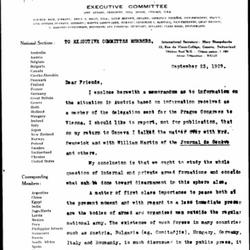
Also known as Emily Greene Balch to Women's International League for Peace and Freedom Executive Committee, September 23, 1929

Balch requests to be appointed as a Referent on Internal Disarmament for the Women's International League for Peace and Freedom.

Addams discusses her views on the American presidential election, American interest in the League of Nations and outlooks for peace.

Levinson sends Addams a donation and provides his ideas of the Kellogg movement.

Levinson sends Addams a donation to Hull-House and discusses his trip to Europe.

The Committee seeks support to free radicals and liberals who are held as political prisoners.

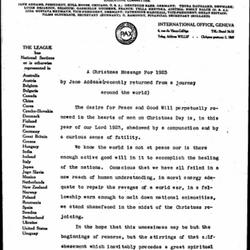
Addams argues for peace and international understanding to help bring Europe out of the devastation of war.

Addams argues for peace and international understanding to help bring Europe out of the devastation of war.

Sheepshanks tells Addams about her health and her ideas about how the job of international secretary for the Women's International League for Peace and Freedom.

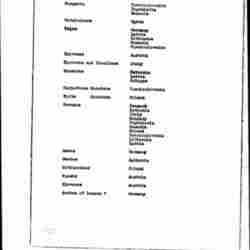
Widegren lists ethnic minorities in European countries.

The Women's International League for Peace and Freedom's balance sheet for the month of December.

Butts writes Addams about her fears of communism, fascism, and violent ideology and recommends the creation of an International Peace Bureau.

Thomas invites Addams to meet Count Richard de Coudenhove-Kalergi of Vienna who will speak on Pan-Europe.

Warburg introduces Addams to Richard von Coudenhove-Kalergi and asks her to assist him while he is in the United States.

Addams addresses a peace meeting and argues that in order for Europe to recover economically, the peace treaty must be revised; she also argues that the United States should and will join the League of Nations.

Addams examines Mayor William Hale Thompson's motives when he censors British books and influences.

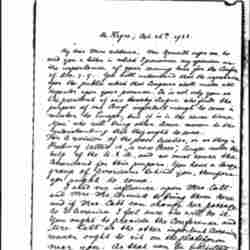
Addams describes public opinion in Europe and calls for American aid and engagement by women voters.

Addams spoke on America's role in international relief efforts and about the work done at Hull House.

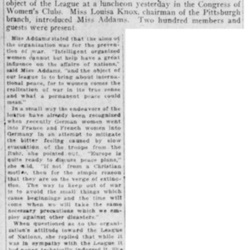
Addams urges her audience to support the United States entry to the League of Nations.

Also known as Significance of the Washington Conference, November 20, 1921 (excerpts)

Addams discusses her impressions of Europe and the Washington Naval Conference at two speeches in St. Louis.

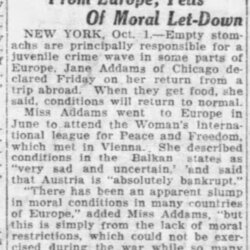
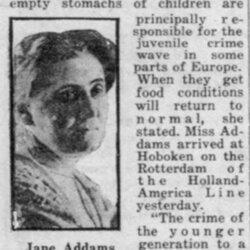
Addams argues that Europe's moral slump is due to wartime problems.

Addams argues that juvenile crime wave is caused by hunger and that relief will solve it.

Also known as Lida Gustava Heymann to Jane Addams, September 2, 1924

Heymann asks the Women's International League for Peace and Freedom's European Sections to start raising funds for peace work so that Addams and the United States Section do not have to do it all.

Dulles explores the implications of the World War I reparations on the world's economy. The speech was initially delivered at the League of Free Nations Association on March 12, 1931 in New York and then published in the New Republic.

Also known as Speech to the Rochester City Club, February 19, 1921 (excerpts)

Addams argued that America needs to offer humanitarian help to Europe.

Addams spoke to the Reading Chamber of Commerce on the role that the United States could play in reducing the humanitarian crisis in Europe.

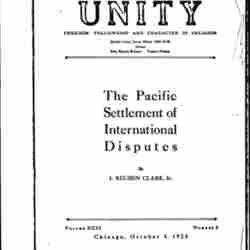
An issue of Unity that features articles on the settlement of international disputes, labor in Italy and Germany, and book reviews.

Morel claims that France is stationing black soldiers in Germany to rape and terrorize German women.

Addams sends Blaine news and documents from The Hague Conference and thanks her for her gift.

Addams makes the case for European relief to save starving children.

Addams discusses efforts to save starving children in Europe.

Addams gave a speech on food conditions in Europe to the Farmer's Institute, a day later than scheduled.

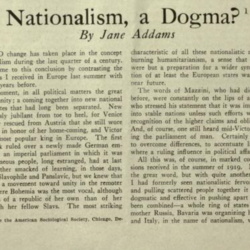
Addams warns of the dangers of the new nationalistic favor sweeping the world following the war. This article was a version of her speech to the American Sociological Society on December 29, 1919.

Jacobs urges Addams to attend The Hague Conference and use her influence to help the situation in Europe.
Output Formats

Export results to CSV,