






Some books are to us not so much books as they are vital experiences. This depends not only upon the book itself, but also upon the sum of influences and of social trends under which it is read. A young person reading today Tolstoy's "What to Do Then" might find it difficult to conceive the profound impression which it made upon sensitive people when it first appeared. At this period In the late eighties there was a widespread moral malaise in regard to existing social conditions, ranging from a mere unformulated sense of uneasiness to an acute consciousness of unredressed wrongs. The abuses connected with the beginnings of machine production had by the end of the nineteenth century been somewhat lessened in England and the United States, but the evil slum conditions in our rapidly growing cities, with all the inevitable results on health and morals, were pressing on men's minds. Social and moral questioning, stimulated by some of the greatest leaders of English thought, had driven deep furrows in the smooth surface of nineteenth century satisfaction with the belief that progress was inevitable.
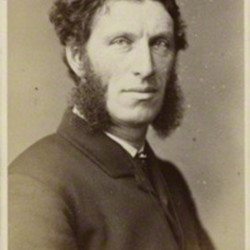
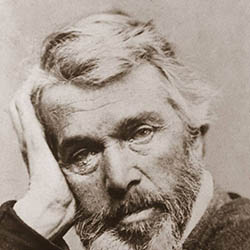
An astonishing number of writers either formulated this uneasiness or described the conditions from which it arose. Although a few of these writers have taken a permanent place in English literature, as had their forerunners, Carlyle, Ruskin, and Arnold, many of them who have since proved ephemeral gave at the moment a poignant challenge to the English reading public. "The Bitter Cry of Outcast London," "Darkest England and the Way Out," Charles Booth's monumental study, "Life and Labor of the People," Beatrice Webb's first-hand story of her voluntary experiences in sweatshop and factory and the brilliant Fabian Essays, containing the early work of Shaw, Sidney Webb, and Olivier, found an echo in the United States, where a lesser literature of the same sort was beginning to appear, although it did not reach its zenith until a decade later.
Into a surcharged atmosphere such as this came the trenchant challenge of Tolstoy's book written with that overwhelming sincerity and simplicity [page 2] which distinguished the works of genius. It illustrated once more that "A new simplicity is the most baffling of all human achievements and the most perdurable." It is also fair to state in defense of the multitude of other writers that none of them was faced with a situation so direct and simple in itself as that presented in Russia. The vague questionings and indictments of long established customs were much more difficult to reduce to underlying principles in the midst of our own complicated social order than they were in the simple conditions prevailing Russia. For instance, in "What to Do Then" Tolstoy had poignantly drawn the contrast between the toiling underfed peasants in the fields and the life led by himself and his friends at the nearby manor house, whither the idlers had come from Moscow to enjoy the pleasures of country life in summer. They were carelessly absorbing the services of peasants whose help was urgently needed to secure the crops of hay and grain during the brief and overburdened days of harvest, and in certain instances, as when the rain threatened to fall upon the drying hay, their luxurious living imperiled the crop itself. The statement of Tolstoy's scruples under these conditions were curiously like those formulated by Abraham Lincoln, years before when driven by the existence of slavery to a long meditation on the basis relations between man and man ↑he↓ had carefully written down, "As labor is the common burden of our race, so the effort of some to shift their shares of burden onto the shoulders of others is the great durable curse of the race."
At the time of the publication of "What to Do Then" Russia was much in men's minds as an outstanding example of both political and social oppression. George Kennan's revelations of the horrors of Siberian exile had bitten deep into the public mind. The abolition of serfdom not yet a generation back had ended a great wrong, but the terms of the emancipation had left the peasants burdened with an impossible load of taxation to which only land-hungry men could have even [passively] submitted. The widespread [page 3] misery in Russia was brogy brought home to everyone who could read a newspaper by the long series of famines to which Russia had always been subject, and we were destined to be torn once again by Tolstoy's own description of the famine of 1891 of which he writes in "What I Believe." Yet after making every allowance for primitive conditions in Russia, Tolstoy's presentation of the contrast between the overworked and the underfed poor on the one hand, and the idle and wasteful rich on the other, was felt as raising unanswerable questions in every country where the book was read. We told ourselves in vain that the situation was oversimplified and that he had made it more logical than life warrants.
Some of us who were making sincere efforts to deal with the results of city poverty were startled by Tolstoy's passionate revulsion against the attempt at a solution through benevolence, although even then we realized that there was nothing in Russia corresponding in reasonableness, thoroughness and extent to the painstaking and very genuine efforts made in Great Britain and the United States to bring intelligent and permanent help to individual cases, efforts which we believed would lead inevitably to legislative and economic reforms. But, even that first rush of enthusiasm incident to the welding of a new implement for social service ↑reform↓ showed traces of the lashing of Tolstoy's book. I find an early definition of social settlements formulated with the preposterous pensiveness of youth: "A social settlement may be described as an anodyne of work for the misery engendered by contemplating life as it is!"
There was also in the minds of many of us at that moment a touch of impatience over the overwhelming concern of Tolstoy for personal righteousness. There was something almost Talmudic in his passionate desire to fulfill the law literally, and to be clean, in the very decades when the leaders of Christian thought were emphasizing the social message of Christianity. But was not Tolstoy himself part of this very movement when he reiterated his conviction that the only method to better external conditions and to lessen the bitter [page 4] and degrading sufferings of poverty was for each man to turn straight around in his path and to share quite simply and directly in the tasks of common labor? We know now only too well how inadequate such a method must be and yet we also know that in one sense there is no other way to make clear the possession of fresh moral insight and to formulate it for others who are unable to formulate it for themselves. It not only stirs others into action but gives reality to the message itself.
For many reasons, therefore, the indictment brought in "What to Do Then" was almost unbearable to thousands of young people who read it in the late eighties and early nineties. This was true, although we even then allowed for the inadequacy of Tolstoy's economic analysis and saw that rural conditions in Russia had become as obsolete in western society as had the cradle which the peasants were using to harvest their wheat. We also saw how unreasonable and even captious he was in his criticism of science, art and literature -- everything that he summed up in the word "civilization" which he so especially detested because he regarded its trivial activities as a time-filling substitute for genuine labor.
Realizing also as we grow older that life can never be logical and consistent, it still remains the fact that Tolstoy makes complacency as impossible now as when "What to Do Then" first appeared. In England, as in Russia, a few conscience-stricken readers renounced their property, some of them going to live in [Tolstoian] colonies, although Tolstoy himself disapproved such attempts. There was at least one such experiment in the United States. But for a single such decision to break with the existing order there were hundreds who without defying well-established custom -- "that principle magistrate of man's life" -- lived through miserable days and sleepless nights tormented by the simple question of "what to do?" Most of these, whether they finally worked through the problem or to their own satisfaction [page 5] or whether they gave it up and lived on as best they could without a sense of having solved it, found their lives in greater or less degree permanently modified. Respect for hard, simple labor was reinforced if not glorified by Tolstoy's feeling in regard to it, and at the least desire remained by to simplify one's personal living and to lesson one's selfish absorption of other people's labor.
How many of his readers found the sense of joyful release in labor that Tolstoy himself describes at the close of the book one cannot know, but this joy is one of the elements which remain distinctly in one's ha mind. The passage describing the release which Tolstoy finds in the wheat field is one of the finest passages ever written even by that great master of literature. Tormented as he had been for years by the intolerable irritant of inner unrest, he tells how he found himself, happier, kinder and more serene, and how the problems that had beset him resolved themselves after he made his great decision and began his laboring days. This was, of course, in some degree a passing phase. The contradictory demands of his new way of life and those of his family, which his reason as well as his affection admitted as legitimate -- and perhaps also his own [complexities] of temperament and experience -- made it impossible for him to work out a permanent, completely self-consistent and satisfactory scheme of life. He never appeared as a triumphant man, and the problems described in this book were never successfully solved, but beset him to the very end. The fact that this was so is due to the greatness of the man at least as much as to his weakness. He would not pretend and, above all, he would not deceive himself, nor his readers. [page 6]
It may be no clearer to us than it was to him that a righteous life cannot be lived in a society that is not righteous. It was clearer to him than it has been to any others, save to a small handful of shining souls, that the true man can attempt nothing less and that society can be made righteous in no other way.
A message such as this comes from time to time and strikes harshly upon a permanent sore spot in the careless hearts of men.
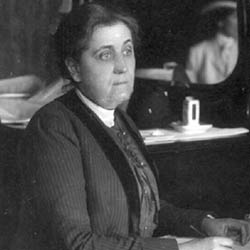
Jane Addams [signed]
Jany 13" 1928↓

Comments