SOCIAL CONSEQUENCES OF THE IMMIGRATION LAW
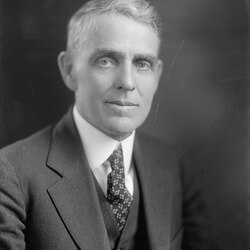
Jane Addams, Hull House, Chicago
Some of you, I am sure, have had opportunity to attend the fine programs held in the Division on Immigration, where the speakers have taken up, case by case, the effect of the present immigration law on family life; where they have instanced broken families whose members were parted before the first law went into effect in 1921 and who have been unable to reunite themselves since. Because divisions of the Conference pass no resolutions, some of the members of this division have formed a temporary organization of their own which is going to petition the government of the United States that if no other way to unite these broken families can be found, the quota regulation be suspended in regard to them until this intolerable situation can be adjusted. There are about 173,000 of these so called "fireside relatives," people living in other countries dependent upon relatives in this country. The relatives include husbands, wives, parents, and children. We think that when the law was passed some provision ought to have been made for such cases. Every social worker who comes in contact with these broken families knows the importance [page 2] of doing something to reunite them. Many of them had been separated before the war, could do nothing during the years of broken down transportation, and before normal conditions were restored were placed under the operation of the quota law without warning. One man who found himself in this situation and could do nothing to adjust his affairs said, doubtless under great provocation, that the United States bythis law was encouraging bigamy.
There is another aspect of the quota law in which we are all interested; the difference which a restricted immigration is supposed to make upon the economic life of the United States by the reduction of unskilled and surplus labor. The quota law was put through Congress largely on arguments based on that aspect. In the old days there was a curious relation between prosperous times and increased immigration and between depressed times and a lessening immigration. Many immigrants, for instance, came in the spring to work upon railroad construction and repairs and then went home to spend the winter. Thirty-eight years ago, when I first came to Hull House, many Italians went home every winter to save coal bills. In those days, an Italian could go from Chicago to Naples for $26.00. Of course, the accommodations were not very decent, but it could be done. All this rough adjustment of immigration to prosperity has now come to an end. Under the quota an effort has been made to proportion the arrivals month by month throughout the year. The natural adjustment having been broken, some wise people are doubting whether there is not something to be said for the mobility of labor and for the increasing use of highly developed transportation facilities in contradistinction to the methods of shutting the gates. This aspect of the situation is for the economists to determine, and some of them, I am happy to say, are making a careful study of it. I think the economists themselves, however, have never sufficiently stressed the fact that the great number of immigrants formerly arriving resulted in an enormous mass of consumers. We forget that they ate a great deal, that they needed houses, that they bought an enormous quantity of shoes and of everything else.
At the opening of this Conference, we were told of the great difficulties encountered by the farmers of the Middle West, and especially this great state, that come from overproduction; that sheer plethora brings down the price of corn and of all other commodities. We are told that in this country of ours every person on the average eats about five bushels of grain in a year. Before the war approximately a million people a year were coming in as immigrants. If this number had been resumed after the war, if a million a year had entered since 1921 when the first quota law was passed, I leave it to you to calculate how much of the farmer's produce they would have consumed. It is certainly possible that they would have made an impression upon it! During the post-war period I went to Kansas on behalf of the Quakers who were still working in sections of starving Europe. At that moment many farmers in Kansas and Nebraska were using corn for fuel because they could not sell it. At a meeting [page 3] which I had been invited to address the farmers' associations of the state with the governor presiding, a speaker from West Virginia told them that the only thing to do was to cut down production, as had been done in his state by the cultivators of tobacco. He made a strong plea and begged them to determine what proportion of their land could advantageously be cultivated and then to stick to it. When my turn came I told of the shortage of food all over Europe and urged them to give all they could to the Quakers who were doing relief work in parts of the world where it was impossible for people to get enough to eat. The Quakers had rented a grain elevator at Wichita and were urging the farmers to fill it with their surplus. Finally, an old man in the audience arose and very impressively demanded that we have a "showdown" on this thing. He said, "These two speakers tell us two different stories, and what are we to do about it? Let's find out whether or not there is too much corn in the world and whether or not we ought to stop growing it." The two opposing views were thus put into a nutshell; but on this occasion we might add, let the people who need our surplus come here to earn money with which to buy it. We were earlier accustomed to have markets come to us, and there are all sorts of difficulties in disposing of our products across the water. This surplusage of raw material in America is one consequence of immigration restriction which ought to be considered by those who are here. It certainly has some bearing on the situation.
Another consequence of the immigration law brought out at the meetings of the Division on Immigration were the effect upon American life when European labor is withdrawn and new problems are raised by the large number of Mexicans who are coming in, and by the great changes in the lives of our colored people who have come from the south into northern industrial centers.
The increase of crime in relation to the younger immigrants was, of course, discussed in the Division and we were told by a careful professor that there is not an undue proportion of crime among immigrants or their children although those of us who come from large cities where the newspapers play up the crimes of the "foreigner," find this hard to believe. For instance, we have in Chicago a notorious situation with two sets of bootleggers between whom there has been a lively war. Part of it was the ruthlessness of early business when each gang was trying to get control of the sale of all the illicit liquor produced in a given area, for while it is comparatively easy to make illicit liquor it is a perilous matter to sell it. These two gangs of people almost exterminated each other and the entire Sicilian population of helpless immigrants suffered in consequence.
There are other social consequences of the immigration law. One of them arises from the fact that immigrants expect more when they come to the United States for the most part than we are able to give them. Graham Taylor, the other day, reminded us of that question which people throughout the ages have put to the Sphinx: "Is the universe friendly?" Mankind has always [page 4] wanted to discover an affirmative answer, and because the immigrants to the United States expect us to be friendly they quickly catch anything which seems to them harsh or unfair. It is curious how quickly they find out friendliness in even remote places which pertains to their problems. In 1921 a conference on migratory labor was held in Geneva by the International Labor Office. Italians in our neighborhood became enormously interested and came to talk to me about it with real enthusiasm. Certain Italians had been going down each year to South America in order to harvest a crop south of the equator, and then to work their way up through Central America and the western states, all the way to Canada, following the ripening of the grain and harvesting as they went. They sometimes got into trouble, were even threatened with peonage in places remote from an Italian consul. When they heard there was going to be some care taken of these migratory laborers, that there was an organization over in Geneva which was at least interested in this very useful business of harvesting the grain of the world, these men felt reassured that such a friendly thing could happen to them, and that it was on an international scale made it more wonderful.
It would be impossible to talk of the social consequences of immigration without referring to the Japanese situation. The Japanese people naturally felt discriminated against by the Exclusion Act. If Japan had been placed under the quota they would have sent less than a hundred and fifty people a year. The lack of even handed justice is felt strongly between nationalities as between groups of children. If you treat everyone alike children will discuss almost everything with you, but you can do almost nothing for them if they feel they are being treated with "partiality," as we used to call it in those ages ago when I was a child.
I should like to illustrate the entire situation of our relation to immigrants by mentioning a case we all have in mind, the case in Massachusetts involving the trial of two Italians. Sacco and Vanzetti are known all over the world. I cannot tell you how many times I was asked about them in Europe last summer. The things said about them were similar to those said when the Dreyfus case was being discussed for more than a decade in France. The French felt that Dreyfus had not had a fair trial, that no one knew whether he was guilty or not because he had not been tried for the charges preferred but for his racial affiliations. Europeans are quite sure that this is happening in regard to these two Italians; that the things they did are not the things they were tried for, that their affiliations were so unpopular that the trial did not get down to the actual facts of the case. Evidently one of the things people get roused about is the trial of a man upon his affiliations, religions, political, social, or racial. They instinctively realize that this has been the historic basis of intolerance. They are now challenging the courts of Massachusetts as once before they challenged the courts of France. Great men like Zola continued to fight for justice in the Dreyfus affair during the years the man was an exiled [page 5] prisoner, until the matter was finally righted. It is to the credit of human nature -- such an effort -- and I suspect we are going to see something like this prolonged in the Sacco-Vanzetti case until the matter is gone into with such thoroughness that people shall be relieved of their suspicions. To live in an Italian neighborhood when men of that nationality are suspected of being treated unfairly makes one realize that fair dealing to the immigrants who come to this country is of primary importance. We must be scrupulous in the justice that is dealt out to them, not only what seems just to us but what seems just to them. Perhaps we are having an acid test of American life just now in this trial of two humble Italians in what we used to call one of our most advanced states. People all over the country and from many parts of the world have sent petitions to the governor of Massachusetts asking for a pardon for these men. The pardoning power vested in the executive is an integral part of our system of jurisprudence and a recognized safeguard against the miscarriage of justice.
Something of that same sort has just now come home to us in regard to Anita Whitney who has become entangled in an organization composed largely of "foreigners." Many of us know Miss Whitney as a social worker. She was secretary of the Charity Organization Society in Oakland, California, an early probation officer, an advocate of suffrage for women. During the war she was arrested because she belonged to a syndicalist organization. I have known Miss Whitney for years in connection with her work for suffrage and I do not remember her as a radical person. There has been no charge against her character, no charge against anything she has done or said, but she was tried and convicted for breaking the syndicalist law of California simply because she was a member of a given organization. I hope some of you will wish to remain after this meeting, that we many organize a committee to do what we can in her behalf.
It is difficult to sum up the situation, but I beg of you to keep informed of what happens in Congress. Some changes are being considered in the immigration law. The Secretary of Labor is advocating that members of broken families be admitted under certain conditions, and probably some action will be taken in regard to Mexico. Let us insist upon a careful study of the human relations involved and of the economic consequences of restricted immigration. These studies should include the point of view of the social workers with the experiences that come to us day by day in dealing with immigrant families. We are challenged in regard to the social consequences of the present immigration law.

Comments