
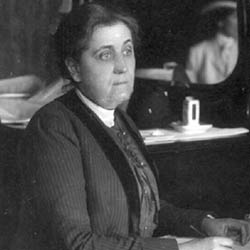
ADDRESS BY MISS JANE ADDAMS.
Life contains many surprises, but I think nothing is more surprising than that I should hear such words from anyone connected with The Chicago Tribune. (Applause and laughter.)
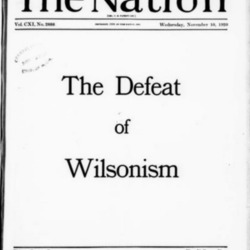
When I took this title, "How Old Is The Nation?? I was going to say something about my earliest childhood memories, which centered more or less about The Nation, because it used to be a tradition that I learned my letters from the outside of The Nation; and I am quite sure that the [page 2] first long, grown up poem I ever learned, I learned out of its pages.
So I thought The Nation was like the moon, or like the front yard, or like the walls of the house; that it was something which was always there, and would always remain.
Some reference has been made to the blacklist this evening. Mr. Villard and I have been on it so long, and known it so intimately that it seems rather surprising to us it should be taken so seriously, (laughter) because my name begins with "A" and his name begins with "V," we were at the two ends of this list, but it used to be quite short, and we were within hailing distance of one another. We were quite friendly, weren't we, Mr. Villard? (Laughter)
It is now getting so long, I feel as if the tail were disappearing into general respectability, and that I were losing Mr. Villard out of the company altogether.
I want also to say, in connection with these memories of mine regarding The Nation, that I think one gets to feel towards a paper like that, that pleased sense which we have when we find our [page 3] inmost convictions stated often very much more brilliantly than we could possibly state them ourselves. And we have a feeling that somehow the brilliance resides in the convictions, and that both belong to us.
I think one has that sense always with a journal that is so honest and fair as The Nation; that it represents the things one would like to be and the things that perhaps more than any other effort, bring the myth or the slogan, whatever one wants to call it -- the ideal it has been called this evening -- more or less within speaking distance of the events themselves.
And that, I suppose is the difficulty, to change what we believe, what we hope for, what we stand for in such wise that it shall influence the event, and the event shall be influenced by it.
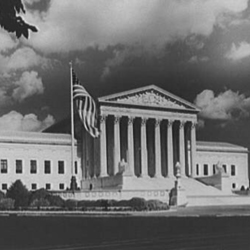
And that I think is what Mr. Villard has done so splendidly during all the year. We are grateful for what he has done for one of our colored friends. I was in India some years ago, and the Constitutionalists there said that there was proceeding from America the most sinister influence [page 4] that could be found in the world against the coming forward into an equality which they deserved of all races which differed from us in color; that the constitutionalists who were very eager to be part of the British Empire -- they were not asking a great deal at that moment -- felt that when they gave the decision in the Supreme Court in February 1923, saying that a Hindu could not become a citizen, could not become naturalized, that their cause received a tremendous blow; that the United States found you must have a segregation; nothing else works.
They said that there were all sorts of influences all the time proceeding from us which influenced the life in India, in Japan, in other nations, in regard to their attitude towards the peoples of the world.
And then you come home and find there are a few papers that do not knuckle to that attitude, and keep on with what is of course the only fair and decent position.
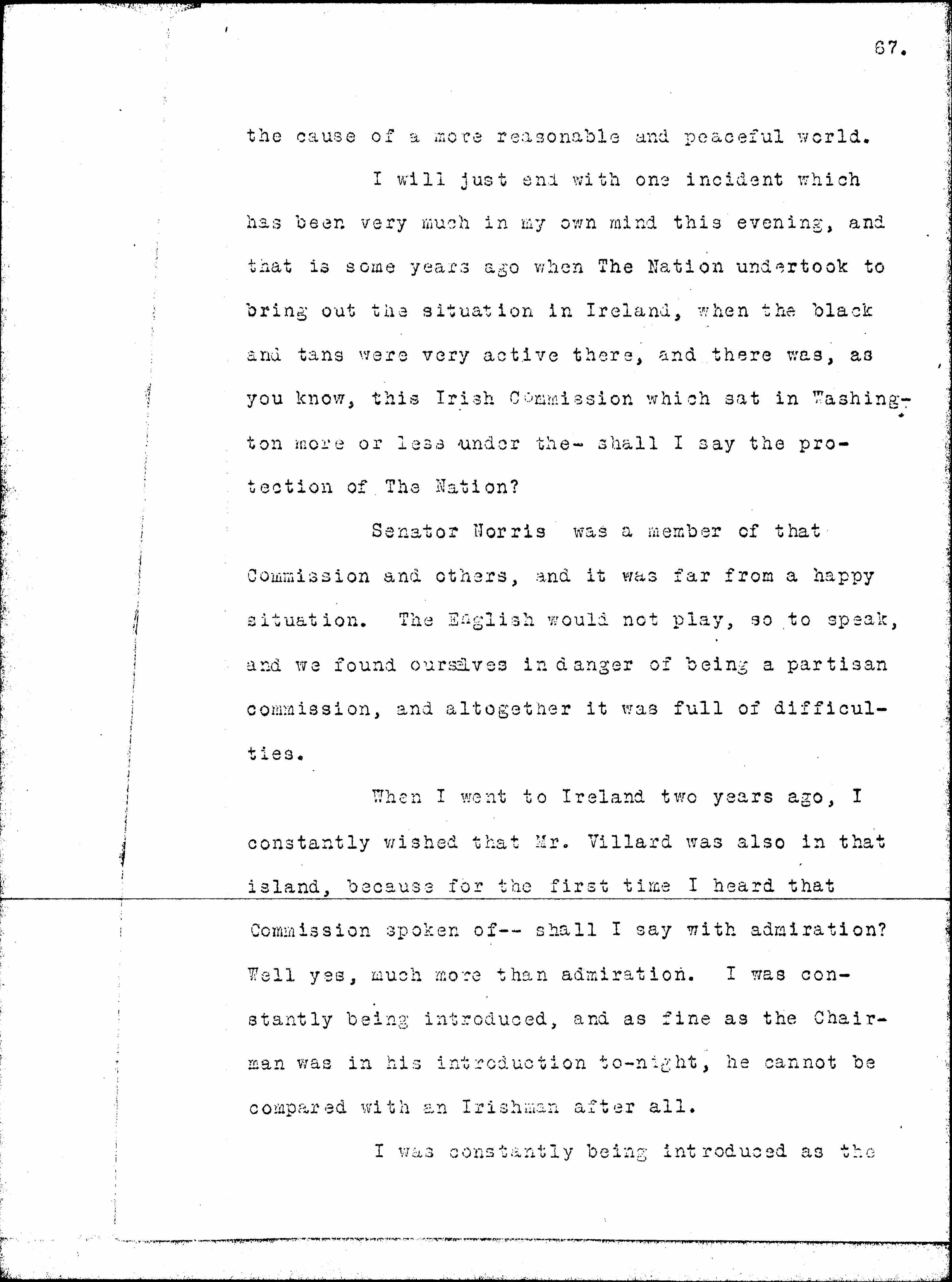
I would not dare get started to tell my gratitude to The Nation for what it has done for the cause of better international relations, and [page 5] the cause of a more reasonable and peaceful world.
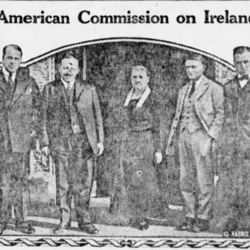
I will just end with one incident which has been very much in my own mind this evening, and that is some years ago when the Nation undertook to bring out the situation in Ireland, when the black and tans were very active there, and there was, as you know, this Irish Commission which sat in Washington more or less under the -- shall I say the protection of The Nation?
Senator Norris was a member of that Commission and others, and it was far from a happy situation. The English would not play, so to speak, and we found ourselves in danger of being a partisan commission, and altogether it was full of difficulties.
When I went to Ireland two years ago, I constantly wished that Mr. Villard was also in that island, because for the first time I heard that Commission spoken of -- shall I say with admiration? Well yes, much more than admiration. I was constantly being introduced, and as fine as the Chairman was in his introduction [tonight], he cannot be compared with an Irishman after all.
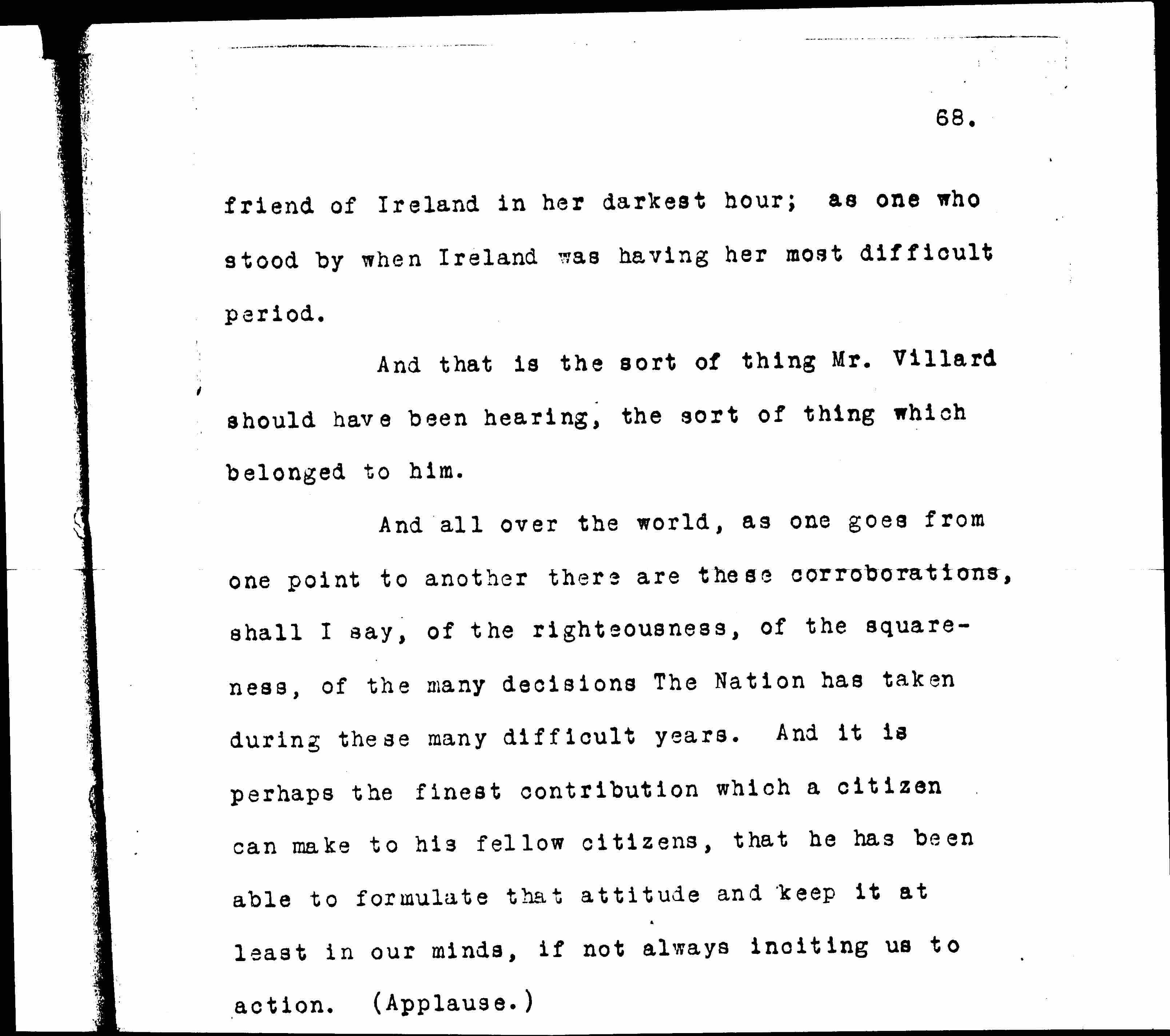
I was constantly being introduced as the [page 6] friend of Ireland in her darkest hour; as one who stood by when Ireland was having her most difficult period.
And that is the sort of thing Mr. Villard should have been hearing, the sort of thing which belonged to him.
And all over the world, as one goes from one point to another there are these corroborations, shall I say, of the righteousness, of the squareness, of the many decisions The Nation has taken during these many difficult years. And it is perhaps the finest contribution which a citizen can make to his fellow citizens, that he has been able to formulate that attitude and keep it at least in our minds, if not always inciting us to action. (Applause.)
Comments