
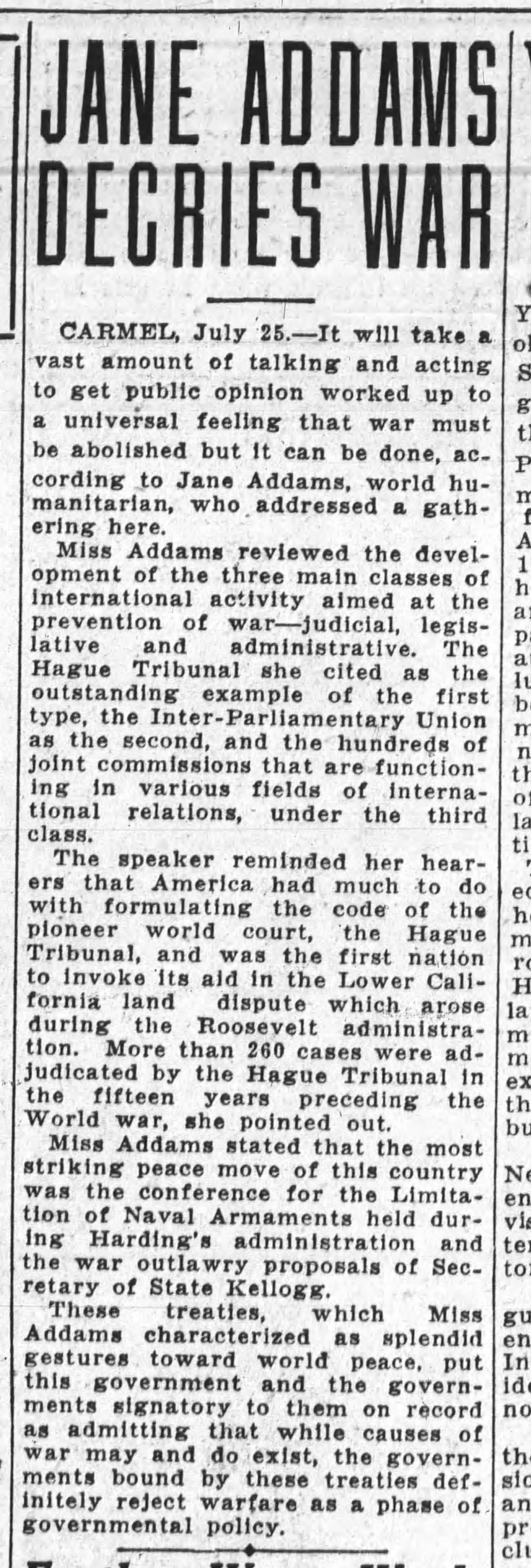
It will take a vast amount of talking and acting to get public opinion worked up to a universal feeling that war must be abolished but it can be done, according to Jane Addams, world humanitarian, who addressed a gathering here.
Miss Addams reviewed the development of the three main classes of international activity aimed at the prevention of war -- judicial, legislative and administrative. The Hague Tribunal she cited as the outstanding example of the first type, the Inter-Parliamentary Union as the second, and the hundreds of joint commissions that are functioning in various fields of international relations, under the third class.
The speaker reminded her hearers that America had much to do with formulating the code of the pioneer world court, The Hague Tribunal, and was the first nation to invoke its aid in the Lower California land dispute which arose during the Roosevelt administration. More than 260 cases were adjudicated by The Hague Tribunal in the fifteen years preceding the World War, she pointed out.
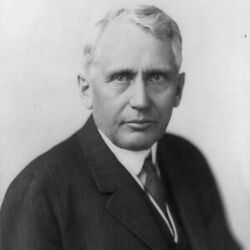
Miss Addams stated that the most striking peace move of this country was the conference for the Limitation of Naval Armaments held during Harding's administration and the war outlawry proposals of Secretary of State Kellogg.
These treaties, which Miss Addams characterized as splendid gestures toward world peace, put this government and the governments signatory to them on record as admitting that while causes of war may and do exist, the governments bound by these treaties definitely reject warfare as a phase of governmental policy.


Comments