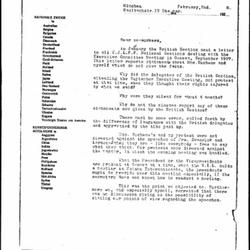
Dear [coworkers],
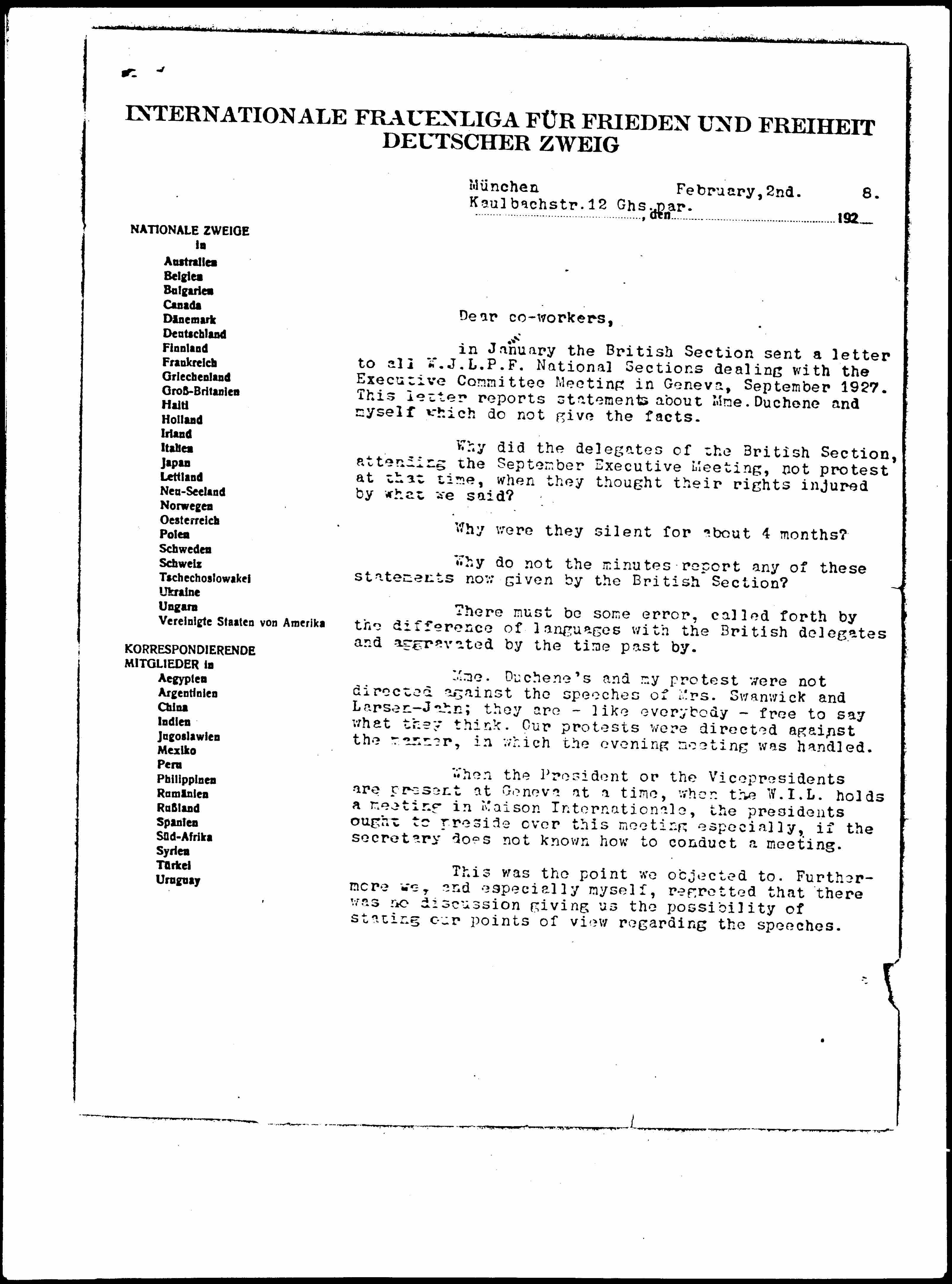
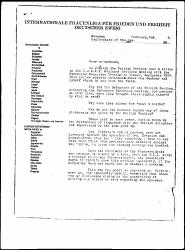
In January the British Section sent a letter to all W.I.L.P.F. National Sections dealing with the Executive Committee Meeting in Geneva, September 1927. This letter reports statements about Mme. Duchêne and myself which do not give the facts.
Why did the delegates of the British Section, attending the September Executive Meeting, not protest at that time, when they thought their rights injured by what we said?
Why were they silent for about 4 months?
Why do not the minutes report any of these statements now given by the British Section?
There must be some error, called forth by the difference of languages with the British delegates and aggravated by the time [passed] by.
Mme. Duchêne's and my protests were not directed against the speeches of Mrs. Swanwick and Larsen-Jahn they are -- like everyone -- free to say what they think. Our protests were directed against the manner, in which the evening meeting was handled.
When the President or the Vice presidents are present at Geneva at a time, when the W.I.L. holds a meeting in Maison Internationale, the presidents ought to preside over this meeting especially, if the secretary does not [know] how to conduct a meeting.
This was the point we objected to. Furthermore we, and especially myself, regretted that there was no discussion giving us the possibility of stating our points of view regarding the speeches. [page 2]
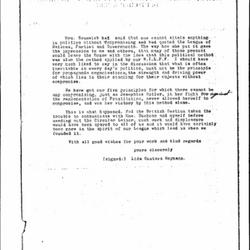
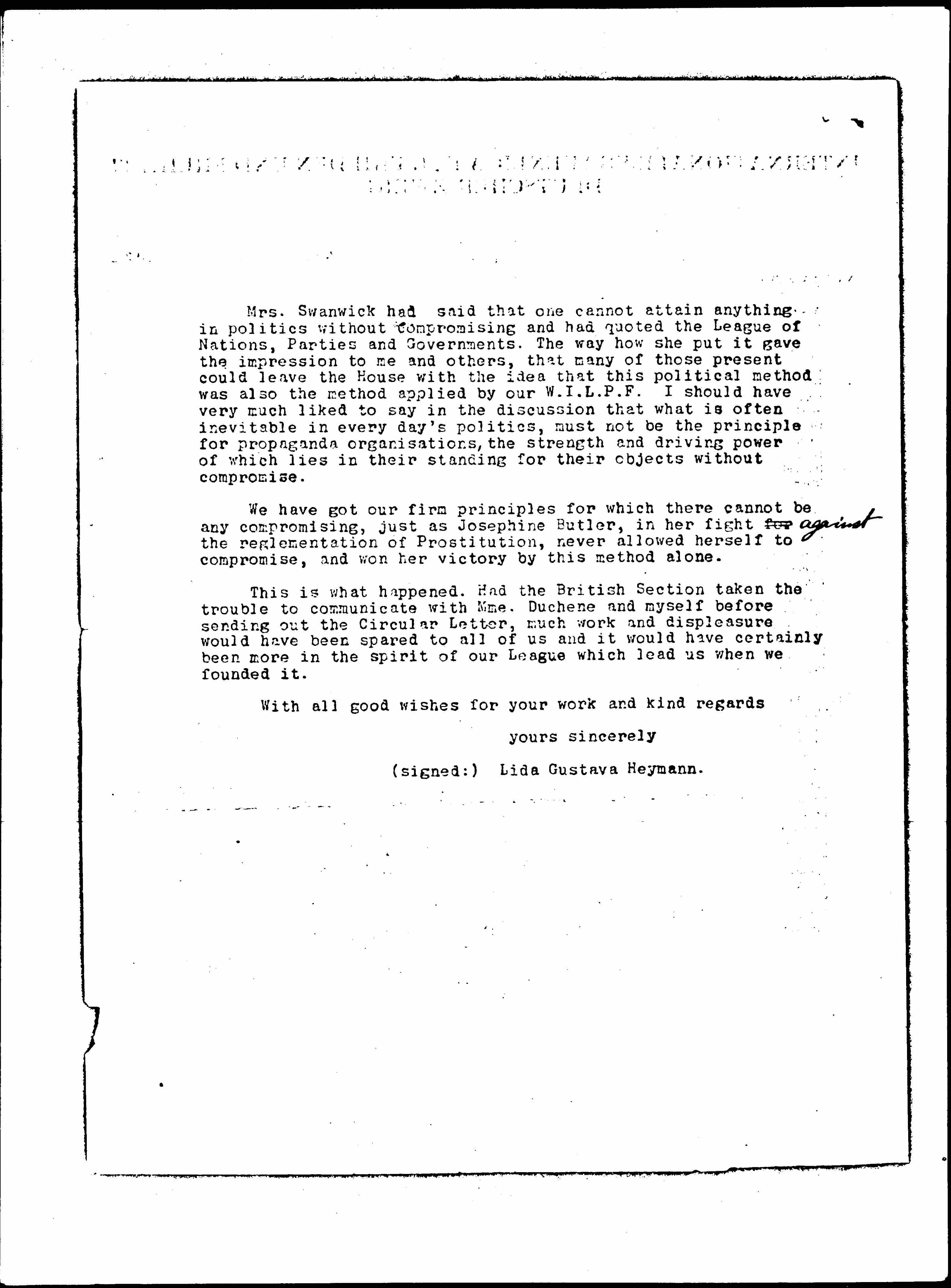
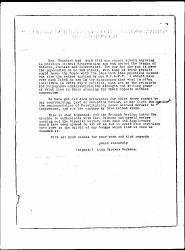
Mrs. Swanwick had said that one cannot attain anything in politics without compromising and had quoted the League of Nations, Parties and Governments. The way how she put it gave the impression to me and others, that many of those present could leave the House with the idea that this political method was also the method applied by our W.I.L.P.F. I should have very much liked to say in the discussion that what is often inevitable in every day's politics, must not be the principal for propaganda [organizations], the strength and driving power of which lies in their standing for their objects without compromise.
We have got our firm principles for which there cannot be any compromising, just as Josephine Butler, in her fight for ↑against↓ the [regulations] of Prostitution, never allowed herself to compromise, and won her victory by this method alone.
This is what happened. Had the British Section taken the trouble to communicate with Mme. Duchêne and myself before sending out the Circular Letter, much work and displeasure would have been spared to all of us and it would have certainly been more in the spirit of our League which lead us when we founded it.
With all good wishes for your work and kind regards
yours sincerely
(signed:) Lida Gustava Heymann.

Comments