THE IMPORTANCE TO AMERICA OF THE JOSEPHINE BUTLER CENTENARY
It is significant that the centenary of Josephine Butler should coincide so nearly with the publication of the report of the Special Body of Experts of the League of Nations on the White Slave Traffic. For this report has not only exposed the facts regarding this great blot on modern civilization, but it has also exposed the futility of state regulation, to the abolition of which Josephine Butler devoted her life. It is to be hoped that the whole hideous system involving compulsory medical examination of prostitutes in the false hope of protecting their patrons from acquiring venereal disease may finally be swept out of existence by its exposure and vigorous condemnation by the Committee of Experts. How grateful Josephine Butler would have been for such a report! In 1875 she wrote as follows to Aimé Humbert:
We want statistics and facts, yes, but would English statistics and facts alone, drawn from a limited experience, be much or generally valued in other countries? Facts from a larger area we must have later, and we shall have them, for, thank God, they stand as indestructible witnesses everywhere of the folly and futility of the attempt to regulate vice. How much more powerful and how strengthening for our cause if we could show facts and statistics gathered from every country, and over a larger period of time. ... We have received all the most recent reports from Italy, France, Germany, and other countries. On every hand there is confession of the failure of regulation. ... all confess to hygienic failure.
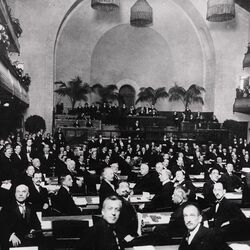
Americans may well be proud of the fact that such a request for statistics and facts was repeated at the first meeting of the League of Nations Committee on the Traffic in Women and Children by one of our younger American women, Grace Abbott, who was sent by the United States government to attend the meetings of the Committee. Miss Abbott not only asked for the facts, but offered to secure in America the funds needed to carry out a searching investigation so that the League Committee could build a constructive program on a sound basis. A brief extract from Miss Abbott's memorandum [page 2] which is published as an Annexe to Part I of the report ought to be quoted:
It is recommended that an investigation be undertaken through the Secretariat of the League of Nations in order to ascertain the following facts with reference to international traffic in women and girls: (1) whether there is an international traffic in women and girls for purposes of prostitution; (2) between what countries the traffic is being carried on and the methods used in procuring and transporting women and girls; (3) the effectiveness of national measures undertaken to eliminate the traffic.
In this investigation the facts as to (1) adult women who willingly and with full knowledge of the purpose for which they are being recruited, as well as (2) young girls and (3) adult women who by force or fraud are imported or exported for purposes of prostitution should be ascertained. Geographically the investigation should include, if possible, the principal cities of the world, but, if this is not possible, typical cities should be selected from which there is reason to believe the traffic is or is not being carried on, those in which regulated houses and those in which abolition is the policy, those situated in countries in which prostitutes and all those who live or benefit by prostitution are excluded from admission, and those whose laws regulating immigration make no or inadequate provision for excluding immoral persons.
From official sources, the facts as to the administration of laws designed to eliminate the traffic can be learned. To secure the information as to the traffic itself, it will be necessary to send to the cities included in the survey agents of high standing with special training and experience to make personal and unofficial investigations. It is recognized that such investigations are difficult, not to say dangerous; but they are absolutely necessary to secure the facts to refute sensational exaggerations or general denials as to the traffic and -- what would seem to be for the Committee of supreme importance -- an intelligent basis for a sound [program] for international [cooperation] for the suppression of the traffic, if it is found to exist.
In an investigation made in the United States in 1908-9 by the Immigration Commission on the Importation and [Harboring] of Women for Immoral Purposes (Senate Document No. 753), it was established that a large number of alien women and girls were at that time being imported into the United States and distributed through the several states for purposes of prostitution. … No thorough national or international enquiry has, however, been made since 1910, and it may be that it has developed in new forms and from new sources. If there is a traffic between the United States and other countries, the United States is eager to know that fact and to [cooperate] in its suppression.[1]
After three years of work the Committee finally published its report, Part I in the spring of last year and Part II early in the [page 3] present year.[2] In both parts, the system of state regulation and licensing is condemned, root and branch, and the Committee has said with emphasis that this investigation led them to the conclusion "that commercialized vice leading to international traffic undoubtedly receives a strong stimulus where prostitution is either ignored or where the control takes the form of official recognition by the registration of prostitutes or the licensing of brothels." The report continues:
There are few, if any, countries where a complete policy of laissez faire in relation to prostitution is adopted or would be defended, though some places have come under notice where the freedom allowed to prostitutes to ply their trade is practically unconditional. The system of official licensing of houses of prostitution is more common, though, as we shall show later, belief in its efficacy either to secure public order or prevent disease tends to grow weaker, and to end in its final abandonment. We have definite evidence that licensed houses create a steady demand for new women and that this demand is met by traffickers and causes both national and international traffic (Part I, p. 14).
Two great questions face us in America today: How far have we gone in abolishing the evils of prostitution? and are we on the right road? Josephine Butler divided the nations of the world into two classes: those which were "abolitionist," that is, believing in the abolition of prostitution rather than its regulation, and those which maintained a licensing system for houses of prostitution. The United States has had no federal policy, but our individual states have on the whole belonged with the "abolitionist" group. But too often we have had abolitionist laws on our statute books and allowed these laws to be nullified in practice by the police, and, more recently, by public health officials under the belief that they are promoting a health policy.
Because the women of Illinois find themselves today in a painful situation I shall quote freely here from the report of the Joint Committee, representing the various women's groups, which was organized three years ago when a new health officer proposed a system of inspecting houses of prostitution. This report has been out of print for two years, and some of the statements need [reemphasizing].
In Illinois there is a considerable body of legislation on the subject of prostitution, consisting of acts of the legislature and of ordinances [page 4] of the cities of the state. These statutes and ordinances may be said to fall into two groups. In the first group are those time-honored and wholesome measures in which the community has from time to time declared its desire to abolish the whole system of prostitution. In the second group are certain measures that indicate a recent and dangerous tendency which is one of the tragic legacies of the war: to regulate prostitution rather than to abolish it.
Looking at the older laws, we note that the first of these measures was an abolitionist statute passed as long ago as 1845,[3] when the state legislature made it unlawful to keep or maintain or patronize these places; and as early as 1874 the legislature[4] put itself on record by declaring that neither the corporate authorities nor any board of health should ever be connected with the maintenance of such places. In express terms the city authorities were forbidden ever to license or to supervise these outlawed establishments. Unfortunately the policy of abolition as partially nullified in practice by the failure of administrative officials to carry it out, and the early statutes were later supplemented by a series of measures passed both by the state legislature and in Chicago by the city council, including such measures[5] as the Pandering Act and the Injunction and Abatement Act.
During the war, when public concern over our soldiers led to a new interest in the control of all forms of vice, certain measures were quite hastily adopted, which, if persisted in, may lead to the introduction in our country of certain phases of the dangerous European policy of "toleration." In this class fall such measures as compulsory examination and hospitalization of prostitutes, and "placarding" of houses of prostitution instead of closing them. The former practice is based upon the following section of the statute passed in 1919 which the women of Illinois consider dangerous to public morals and have asked to have repealed:
When it appears to any judge or justice of the peace from the evidence or otherwise that any person coming before him on any criminal charge may be [page 5] suffering from any communicable venereal disease, it shall be the duty of such judge or justice of the peace to refer such person to the director of such hospital, sanitarium, or clinic, or to such other officer as shall be selected or appointed, for the purpose of examining the accused person, and if such person be found to be suffering from any communicable venereal disease, he or she may by order of court be sent for treatment to a hospital, sanitarium, or clinic if any be available, and if necessary to be segregated for such term as the court may impose at such hospital, sanitarium, or clinic.[6]
In practice this statute means that women who have not even been convicted of the violation of any law are, merely on suspicion, subjected to a compulsory examination. If one is found to have a venereal disease, what is virtually a sentence of compulsory hospitalization is imposed. The men who are the companions of these unfortunate women are in practice treated very differently. It is true that the word "persons," and not "women," is used in the law, but in Illinois, as in other communities where such laws have been passed, it is regularly enforced, as it is meant to be enforced, against women alone. The law was passed in 1919, and in April, 1922, the Chicago press announced as a sensational piece of news[7] that for the first time one of these sentences had been imposed on a man. That is, during the three years from 1919 to 1922, although the law said "persons," this provision had apparently never been invoked against a man, whereas hundreds of women had suffered under it.
Again in the first week of the present year the newspapers announced that another health officer, recently appointed, was going to enforce the compulsory examination and treatment procedure, not only upon women, but upon the men who were found with them. This was discussed as a new and startling policy.
A further objection to the Illinois statute is that it is undoubtedly unconstitutional because it virtually provides for the punishment of women before they are found guilty of any offense, for they are subjected to a forcible examination before any evidence is heard by the court against them and are actually put under detention for long periods of time in a "lock hospital."
The present system is, as we have said, based on a policy of discrimination against women. For, however fair-spoken these statutes [page 6] may be in seeming to punish equally men and women who are equally guilty, or however good the intentions of our health officers may be in desiring to avoid discrimination against women, in practice it is impossible to enforce such laws fairly as between men and women.
Moreover, we have every reason to believe that if an attempt were made to enforce such legislation against men a prompt appeal would be made to the courts. In 1923, when some of the women's organizations in Illinois were asking for the repeal of this law, the corporation counsel of the city of Chicago gave an opinion indicating that the enforcement of the law against men would not be tolerated. Press reports gave the corporation counsel's opinion as follows:
Worthy as they may be, the State Health Department rules are, after all, merely arbitrary rules fixed by other than the legislature, and if strictly enforced would be tantamount to depriving a man of his liberty without due process of law and his right to bail, both guaranteed him under the Constitution.
When those rules were adopted the State Health Board merely arrogated to itself the power of the legislature. I fear if the Chief of Police undertook to force men into an examining room or to confine them in a hospital without trial, he would be the target of well-founded damage suits.[8]
The corporation counsel might have gone one step farther to point out officially the obvious conclusion that if women arrested by the police are forced into an examining-room or confined in a hospital without trial they too are deprived of their liberty and their right to bail, both guaranteed to them under the Constitution!
Mr. Abraham Flexner, in his memorable study of Prostitution in Europe, set out the vicious consequences of a system of trying to control prostitution and venereal disease by punishing women only when he said:
Prostitution must be punished, if at all, because its consequences are bad, because of the waste it involves, the disease it spreads, the demoralization it entails. Yet so long as the woman alone suffers, these consequences are not abated. ... Punishment of the woman in any particular case stops none of these; the man simply wastes his substance upon others; contracts disease from other women and carries it elsewhere, even into his only family; corrupts others, in case a previous associate has been put out of reach by the law. To make prostitution a crime for the woman alone is, therefore, at once inequitable and futile. It is likewise becoming progressively more difficult. As long as societies [page 7] were organized on the theory of male superiority, the woman could perhaps be singled out to bear alone the burden of a dual offense. But that day is past. Theoretically, the equal ethical responsibility of both sexes in every relation in life is already recognized; it is rapidly becoming incorporated in law. ... The stigma and consequence of crime must therefore be either removed from the woman or affixed to the man (pp. 107-8).
The present system is objectionable because it leads to the continuation of the outlawed houses and does not abolish them; it involves the use of the "raid," an un-American policy, which should be unqualifiedly condemned; it involves also the degradation of the officials who enforce the law through the unlimited possibilities of corruption and "graft;" and it leads to the deterioration of public morals through the sensational press stories.
In the final analysis the raid is a violent and [undemocratic] method of law enforcement. It belongs more properly to the dark days of the Russian autocracy than to the twentieth century in America. A body or "squad" of police are rushed to the suspected places in patrol wagons; the various exits and entrances are guarded while the inmates are "rounded up." And while a neighborhood crowd of men, women, and children gather to look on, the inmates are forcibly conducted to the patrol wagons and then taken to the police stations. Later, the women are taken to the health department for a compulsory examination; and they are then held by the police until the results of the examinations are available, when they are taken to court. The "raid," which is spectacular enough to blind the public into thinking that something is being done, is futile. A few houses are "raided" while others are left free to operate. And the "raided" houses frequently open again "for business" with new recruits within an hour after the police and patrol wagon have left. A few women and girls are held in jail while others who if not already infected may soon become infected are left free to take their places.
A sound public policy of course demands that a woman or a girl to be arrested should be taken into custody decently and quietly by a woman police officer, transported to a proper house of detention for women, placed in the hands of social service workers, and given a chance to free herself from the slavery of her old life.
The defenders of this examination hold that it is similar to the treatment accorded to a patient who is detained before trial in a [page 8] psychopathic hospital and there examined by alienists, that the judge may have the fullest information when the patient appears before him; that it is in line -- although not altogether similar -- to the collection of facts, medical and otherwise, by social workers employed by the court itself before a case is heard before the judge. So cogent does this argument appear to certain social workers that they fear to attack this unjust practice lest it interrupt what they consider a beneficent trend in judicial procedure. A more careful analysis shows that it is really in conflict with modern judicial procedure, especially under certain new statutes passed in the last few years, dealing with psychiatric cases.
These measures should be condemned for many reasons, because even prostitutes, poor and with no friends to see justice done, should surely be given fair treatment in our American courts instead of being punished before they are tried. In the old days the prostitute was fined and went back to ply her old trade. Today she is arrested, compulsorily examined, and held in detention for treatment. In either case she shortly returns again to her accustomed life, and the whole wretched business begins over again. "What can it avail," asks Mr. Abraham Flexner,
to incarcerate for brief periods a few unhappy women, if meanwhile the manufacture of fresh foci of infection proceeds unhampered? As long as regulation completely omits men, new sources of infection are produced far more rapidly than by any known method they can be eradicated. A vicious circle exists. Men infect the beginners -- themselves at the time out of reach -- who in their turn infect other men. ... Prostitution is a concept involving two persons. Logic and justice alike require that both parties be considered as equal partners in the act; and in no respect is it more completely impossible to omit either of the two essential factors from the reckoning than in the matter of disease. Society has chosen to overlook the man; but nature has righted the balance by impartially distributing disease and suffering; nor will she permit herself to be outwitted by any one-side scheme, even though it be far more extensive and efficient than regulation has thus far anywhere been (p. 264).
The system of "placarding" houses of prostitution in which women are found to be suffering from venereal disease is especially to be condemned. The report of the Chicago Health Department issued last year, which covered the period 1923 to 1925, speaks of this dreadful system as "one of the most valuable adjuncts in the suppression [page 9] of prostitution and the control of venereal diseases" (p. 176), and refers to the "heroic stand" of the mayor and the activity of the police department in connection with this policy. The report continues (p. 178): "The placarding of houses of prostitution which was dramatically and heroically carried on at the beginning of the Commissioner's campaign to eliminate venereal disease has probably been the greatest factor in convincing the vice interests that venereal disease will not be tolerated in the city of Chicago." The report then explains that "every prostitute who falls into the hands of the police is brought to the Health Department; if she is found to be infected with a venereal disease, it means not only isolation for the prostitute, but it means placarding of the house." Could anything be more lawless than this system? Surely if a health officer knows of the existence of a house of prostitution, whether venereal disease is present or not, it is his duty to report the fact at once to a law-enforcing officer and have it closed, instead of having the inmates examined and placing a placard on the door.
One point should be emphasized, since it is the occasion of much misunderstanding, and that is that the system of compulsory examination and compulsory hospitalization of women who are supposed to be of the prostitute class should be opposed, not only on the ground of public morals, but it should also be squarely opposed because of its complete failure as a public health measure.
Our law dealing with the control of contagious diseases gives the health officer very wide powers in the matter of isolating, quarantining, and placarding all cases of dangerous communicable disease. No one will deny the necessity of granting such powers to the health officials; but it is a fundamental principle that they should be uniform in their application.
Can anyone believe that a plan under which a very few of the many women who have venereal disease are quarantined, while the vast majority of the diseased women, and at present all of the diseased men, are left free to spread the infection, is a really sound method of protecting public health?
It is often said that there is no difference in the treatment of scarlet fever and the treatment of venereal disease, that both must be quarantined and the places in which they are found placarded. [page 10] Although this sounds plausible, it is clear that there are very wide differences. Every case of scarlet fever is supposedly known and placarded, whether the patient is rich or poor, a man or a woman. In the case of venereal disease only a very small proportion of cases are ever reported or known, and apparently the only ones that are ever placarded -- and these are not quarantined, they are only placarded -- are occasional cases of houses of prostitution. If scarlet fever and smallpox were not placarded we should have no way of protecting ourselves from the contagion. People do not wantonly expose themselves to the dangers of these diseases. But it is a tragedy of our civilization that men do wantonly expose themselves to the contagion of venereal disease. Placarding is not only futile, but actually dangerous. For even the occasional placarding of places in which venereal disease has been found inspires confidence that the health officials are really quarantining all infected places, and leads to a false sense of security. The "house" that is not "placarded" is believed to be "safe," whereas it may become infected at any hour, at any moment. The woman who is not infected when one "raid" occurs may become infected long before another "raid" is made.
The city ordinances of Chicago and the orders of the state Department of Public Health show clearly the difference between venereal and other contagious diseases. Our Chicago ordinance making venereal diseases reportable clearly says that "the name and address of such diseased person shall not be reported to the department of health."[9] A regulation of August 1, 1918,[10] issued by the state Department of Public Health, makes venereal diseases reportable, but provides that the name of the diseased person is to be omitted "if such person is not a prostitute, an associate of a prostitute, is not in the military or naval service, and gives assurance that he will take treatment and follow the instructions of the physicians."
The names and addresses of persons having smallpox and scarlet fever are not withheld from the health department. They are all reported [page 11] so that every case may be quarantined. It is clear that the purpose of withholding names is to prevent the health department from disturbing or quarantining certain infected persons. Can anyone believe that the spasmodic quarantining of an occasional prostitute is a scientific proceeding in the name of public health? As a well-known authority[11] has pointed out, the infected man who may later transmit disease to his innocent wife and children is a much more dangerous person from the standpoint of racial infection and is in much greater need of being quarantined.
All these measures are objectionable for many reasons, but most of all they are objectionable because they are futile. Nothing could be more ineffective than a system of quarantine dealing only with women, or only with prostitutes. Statistics from the records of our Chicago clinics show a much larger number of cases of venereal disease among men than among women, as is true with such clinics the world over. Thus, in 1925, the last year in which statistics are available there were reported 18,404 cases of men and 6,827 cases of women with a venereal disease in Chicago.
Moreover, the prostitute class includes only a fraction of the women infected with such diseases. In testifying before a parliamentary committee in Great Britain, the Undersecretary of State for War said that the testimony of doctors had indicated that from 72 to 75 [percent] of venereal disease came from the [nonprofessional] class. Similarly, Sir Archdall Reid, in an article in the Nineteenth Century,[12] said, "three out of four soldiers now acquire their infections from amateurs." And he suggests that evidently prostitutes only hang on the fringe of current immortality.
Even if every prostitute in Chicago were examined and quarantined (and this has never been proposed and would never be tolerated), we should then be dealing with not more than 5 or 10 [percent] of the total number of persons suffering from this disease. The last report of the Commissioner of Health shows only 619 women quarantined in a year in Lawndale. As this is approximately 2½ [percent] of the persons who were reported to the health authorities as suffering from venereal disease, under our present system we are, therefore, [page 12] quarantining about 2½ [percent] of the known cases, and we are fairly entitled to ask if a 2½ [percent] quarantine can be defended as a public health policy.
The last published report of the Chicago Department of Health also says with regard to the Lawndale hospital that the fact that it had been possible to "treat so many women in the contagious stages of syphilis has been a powerful factor in the control of this dread disease" (p. 191). But a careful examination of the report shows that only 119 women with syphilis were admitted to Lawndale, whereas 8,508 cases of syphilis were reported to the health department in the same year (p. 166). That is, approximately 1 [percent] of the syphilis patients reported to the health department were locked up in the Lawndale hospital, and of course all of the patients so treated were women. Again it may be asked if a 1 [percent] quarantine is a scientific method of dealing with a disease like syphilis.
Further, it should not be forgotten that if all the infected prostitutes in Chicago were quarantined today a large number of others would be infected tomorrow because this disease is spread by men as well as by women. It is claimed that by detaining these few women, thousands of men are prevented from acquiring venereal disease. But it is well known that the places of women in detention are immediately filled by others who may already be infected or are likely to become infected at once. Houses have been known to reopen with new recruits immediately after a raid, and the new recruits continue the hideous spread of the plague.
Finally, we must confess in the year of the Josephine Butler centenary that compulsory examination and compulsory quarantining are dangerous because they are one phase of the old system of regulation that has failed utterly in Europe and has been condemned by every candid student of the question. The adoption of any part of this revolting system in our country should be opposed by every American woman and every American social worker, and a vigorous demand should be made for the abolition of the laws dealing with this subject.
The question is sometimes asked, "What do you propose to do with Lawndale and its inmates? Your policy," it is said, "would mean closing Lawndale and turning the inmates into the street." [page 13] Our reply is, Not at all; Lawndale should be maintained as a voluntary hospital, not a prison. We would turn the prisoners of Lawndale into voluntary patients. We believe that a good social service worker could persuade most of the women who are there now to enter for treatment. A hospital of this kind, if well conducted on a voluntary basis, would not be in want of patients. The Public Health Institute of Chicago averages 1,600 cases daily, the Social Hygiene Clinic treats 100 more.
While it is clear that nothing will finally prevent future infection expect the abolition of all forms of prostitution, in the meantime vigorous support should be given to officials who are providing facilities for voluntary treatment and for treating all infected persons, whether the infection has been willfully or innocently acquired. Well-conducted free clinics and social service are the proper remedies, as is happily being demonstrated.
Another false contention is the claim that venereal disease continues to exist because in the past the only attempts to prevent it have been "along moral and educational lines." This is a statement that is very wide of the truth. As a matter of fact, in the past the moral and educational sides have been greatly neglected. The "abolitionist" laws have been only half-heartedly enforced, and until recently it was common for local authorities to tolerate vice, the "segregated district," and all the evils connected with it. The insistence on moral teaching is not old; it is new. The system that has failed is the old system of segregation and toleration.
It is impossible to conclude this article without suggesting that, in memory of Josephine Butler, time and space should permit the quotation in full of the famous women's protest which she wrote and which was published in the London Daily News on December 31, 1869. This "protest" should give us food for thought in America, where in the last decade we have so fallen away from the old abolitionist faith, and have been so slow to defend the principles for which Josephine Butler stood. Her protest is quaintly called the "Protest of the Ladies,"[13] but they were women with valiant souls, whose courage should inspire us today. [page 14]
We, the undersigned, enter our solemn protest against the {Contagious Diseases} Acts. (1) Because, involving as they do such a momentous change in the legal safeguards hitherto enjoyed by women in common with men, they have been passed not only without the knowledge of the country, but unknown in a great measure to Parliament itself; and we hold that neither the Representatives of the people nor the Press [fulfill] the duties which are expected of them, when they allow such legislation to take place without the fullest discussion. (2) Because, so far as women are concerned, they remove every guarantee of personal security which the law has established and held sacred, and put their reputation, their freedom, and their persons absolutely in the power of the police. (3) Because the law is bound, in any country professing to give civil liberty to its subjects, to define clearly an offence which it punishes. (4) Because it is unjust to punish the sex who are the victims of a vice, and leave unpunished the sex who are the main cause both of the vice and its dreaded consequences; and we consider that liability to arrest, forced medical treatment, and (where this is resisted) imprisonment with hard [labor], to which these Acts subject women, are punishments of the most degrading kind. (5) Because by such a system the path of evil is made more easy to our sons, and to the whole of the youth of England, inasmuch as a moral restraint is withdrawn the moment the State [recognizes], and provides convenience for, the practice of a vice which it thereby declares to be necessary and venial. (6) Because these measures are cruel to the women who come under their action, violating the feelings of those whose sense of shame is not wholly lost, and further [brutalizing] even the most abandoned. (7) Because the disease which these Acts seek to remove has never been removed by any such legislation. The advocates of the systems have utterly failed to show, by statistics or otherwise, that these regulations have in any case, after several years' trial, and when applied to one sex only, diminished disease, reclaimed the fallen, or improved the general morality of the country. We have on the contrary the strongest evidence to show that in Paris and other continental cities, where women have long been outraged by this system, the public health and morals are worse than at home. (8) Because the conditions of this disease in the first instance are moral, not physical. The moral evil, through which the disease makes its way, separates the case entirely from that of the plague, or rather scourges, which have been placed under police control or sanitary care. We hold that we are bound, before rushing to experiments of legalizing a revolting vice, to try to deal with the causes of the evil, and we dare to believe, that with wiser teaching and more capable legislation, those causes would not be beyond control.
JANE ADDAMS
[1] League of Nations, Report of the Special Body of Experts on Traffic in Women and Children (C. 52. M. 52. 1927. IV).
[2] See below, p. 166, for a review of Part II of the report. Part I was reviewed in Vol. I, p. 354.
[3] Illinois Revised Statutes (Smith-Hurd, 1927), chap. 38, sec. 162.
[4] Ibid., chap. 24, sec. 540.
[5] See ibid., chap. 38, secs. 46, 170-74, 537, 578; chap. 100½, secs. 1-4; and see also Ettelson, Chicago Municipal Cod (1922), 1914-21.
[6] Illinois Revised Statutes, chap. 23, sec. 392. The italics, of course, are mine.
[7] See the Chicago newspapers of April 15, 1922.
[8] Reprinted in July-August, 1923, Bulletin of the Illinois League of Women Voters.
[9] Ettelson, Chicago Municipal Code (1922), sec. 1815.
[10] Illinois Department of Public Health, Venereal Diseases. Syphilis, Gonorrhea, and Chancroid. Rules and Regulations ... for the Control, Suppression and Eradication of Venereal Diseases (Springfield, 1918).
[11] Edith Houghton Hooker, The Laws of Health, chap. ix.
[12] XC (August, 1921), 348.
[13] Quoted in Josephine E. Butler, an Autobiographical Memoir, edited by George W. and Lucy A. Johnson (Bristol, 1909), pp. 94-96.

Comments