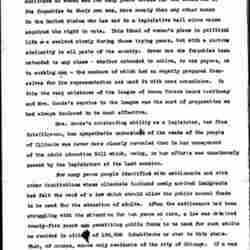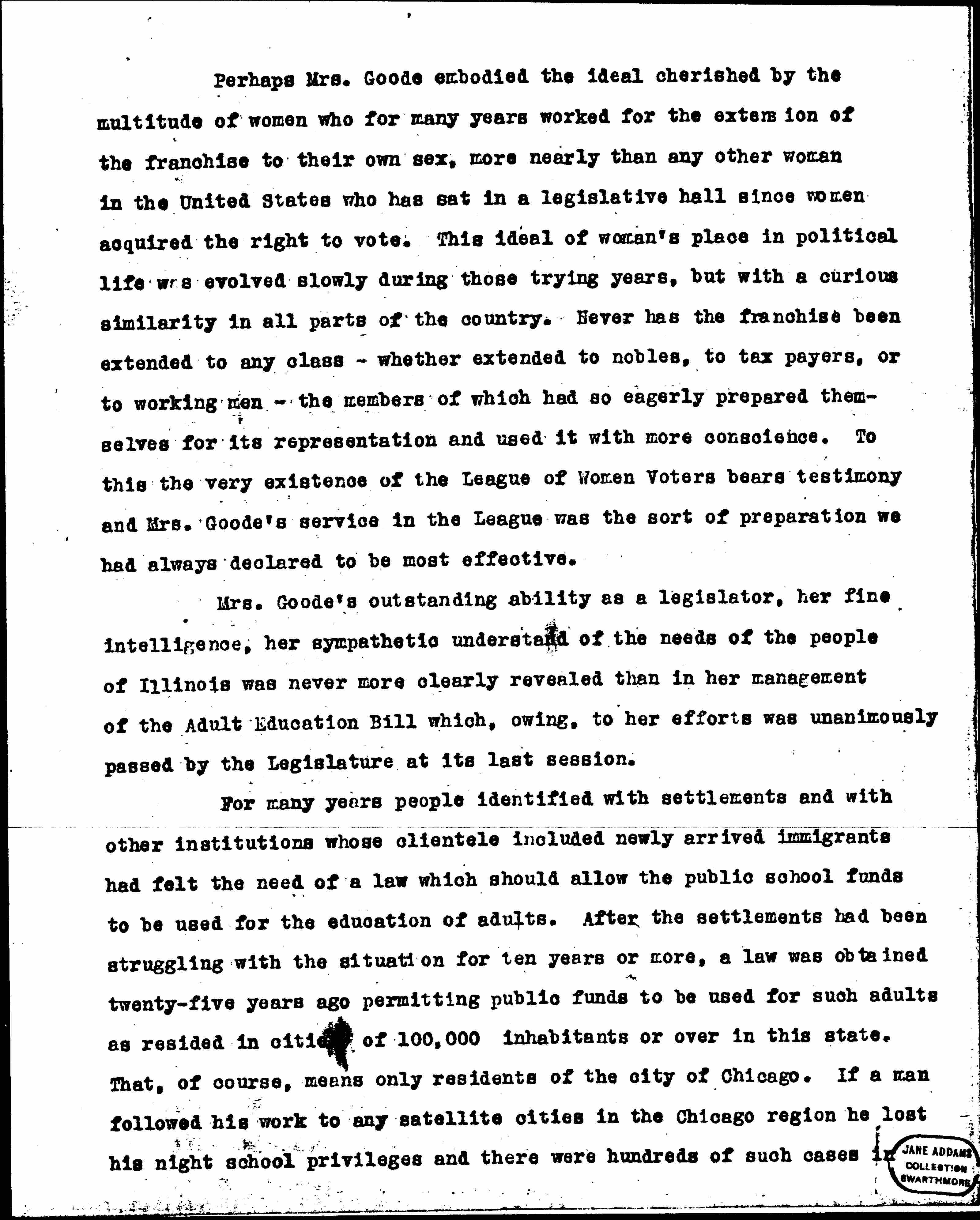

Perhaps Mrs. Goode embodied the ideal cherished by the multitude of women who for many years worked for the extension of the franchise to their own sex, more nearly than any other woman in the United States who has sat in a legislative hall since women acquired the right to vote. This ideal of woman's place in political life was evolved slowly during those trying years, but with a curious similarity in all parts of the country. Never has the franchise been extended to any class -- whether extended to nobles, to tax payers, or to working men -- the members of which had so eagerly prepared themselves for its representation and used it with more conscience. To this the very existence of the League of Women Voters bears testimony and Mrs. Goode's service in the League was the sort of preparation we had always declared to be most effective.
Mrs. Goode's outstanding ability as a legislator, her fine intelligence, her sympathetic understand of the needs of the people of Illinois was never more clearly revealed than in her management of the Adult Education Bill which, owing, to her efforts was unanimously passed by the Legislature at its last session.
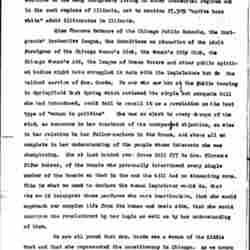
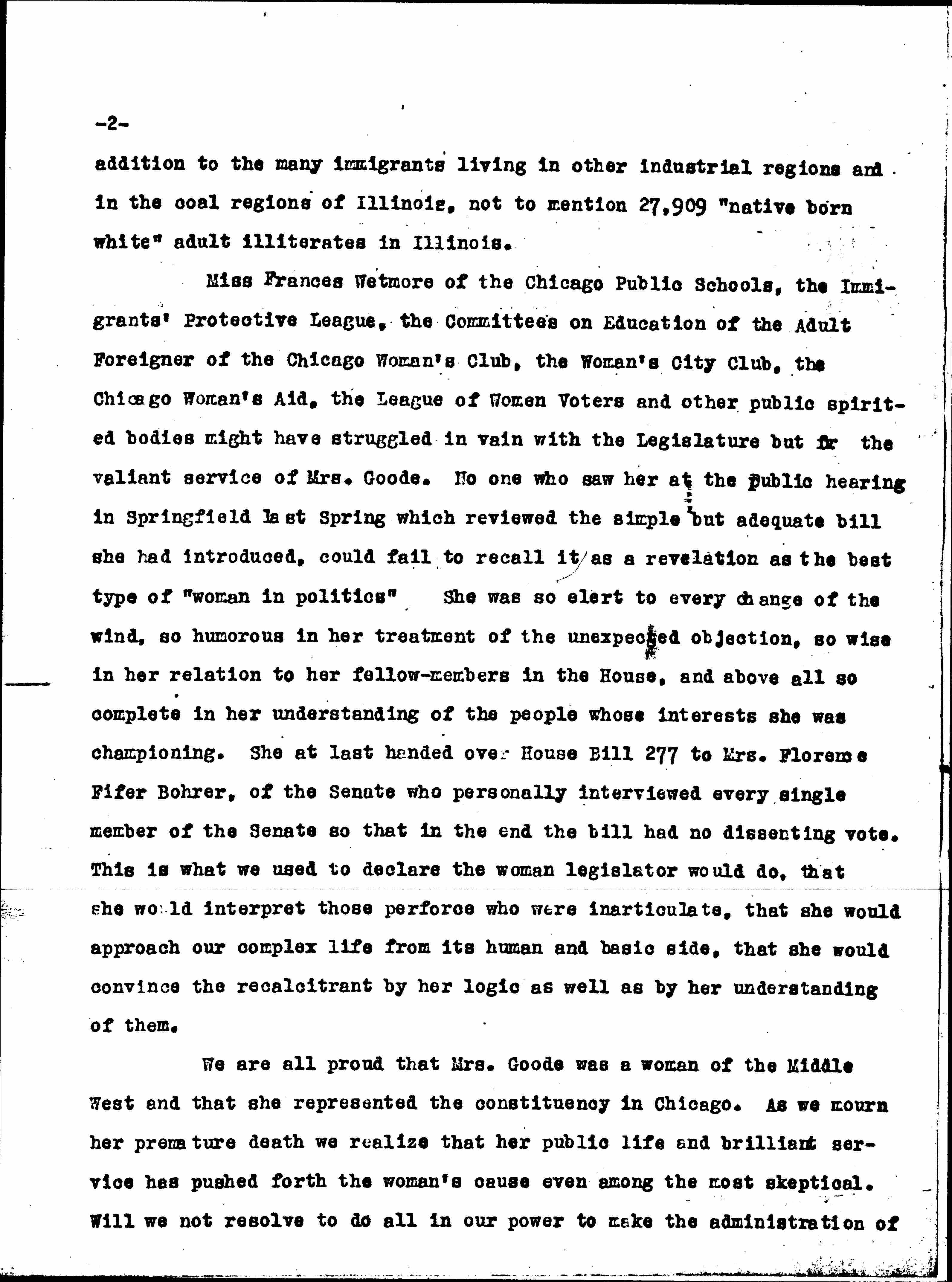
For many years people identified with settlements and with other institutions whose clientele included newly arrived immigrants had felt the need of a law which should allow the public school funds to be used for the education of adults. After the settlements had been struggling with the situation for ten years or more, a law was obtained twenty-five years ago permitting public funds to be used for such adults as resided in cities of 100,000 inhabitants or over in this state. That, of course, means only residents of the city of Chicago. If a man followed his work to any satellite cities in the Chicago region he lost his night school privileges and there were hundreds of such cases in [page 2] addition to the many immigrants living in other industrial regions and in the coal regions of Illinois, not to mention 27,909 "native born white" adult illiterates in Illinois.
Miss Frances Wetmore of the Chicago Public Schools, the Immigrants' Protective League, the Committees on Education of the Adult Foreigner of the Chicago Woman's Club, the Woman's City Club, the Chicago Woman's Aid, the League of Women Voters and other public spirited bodies might have struggled in vain with the Legislature but [for] the valiant service of Mrs. Goode. No one who saw her at the public hearing in Springfield last Spring which reviewed the simple but adequate bill she had introduced, could fail to recall it as a revelation as the best type of "woman in politics." She was so [alert] to every change of the wind, so humorous in her treatment of the unexpected objection, so wise in her relation to her fellow-members in the House, and above all so complete in her understanding of the people whose interests she was championing. She at last handed over House Bill 277 to Mrs. Florence Fifer Bohrer of the Senate who personally interviewed every single member of the Senate so that in the end the bill had no dissenting vote. This is what we used to declare the woman legislator would do, that she would interpret those perforce who were inarticulate, that she would approach our complex life from its human and basic side, that she would convince the recalcitrant by her logic as well as by her understanding of them.
We are all proud that Mrs. Goode was a woman of the Middle West and that she represented the constituency in Chicago. As we mourn her premature death we realize that her public life and brilliant service has pushed forth the woman's cause even among the most skeptical. Will we not resolve to do all in our power to make the administration of [page 3] the new Adult Education Law a memorial to her who cared so much that the amazing and unnecessary percentage of illiteracy in Illinois should become a thing of the past?

Comments