
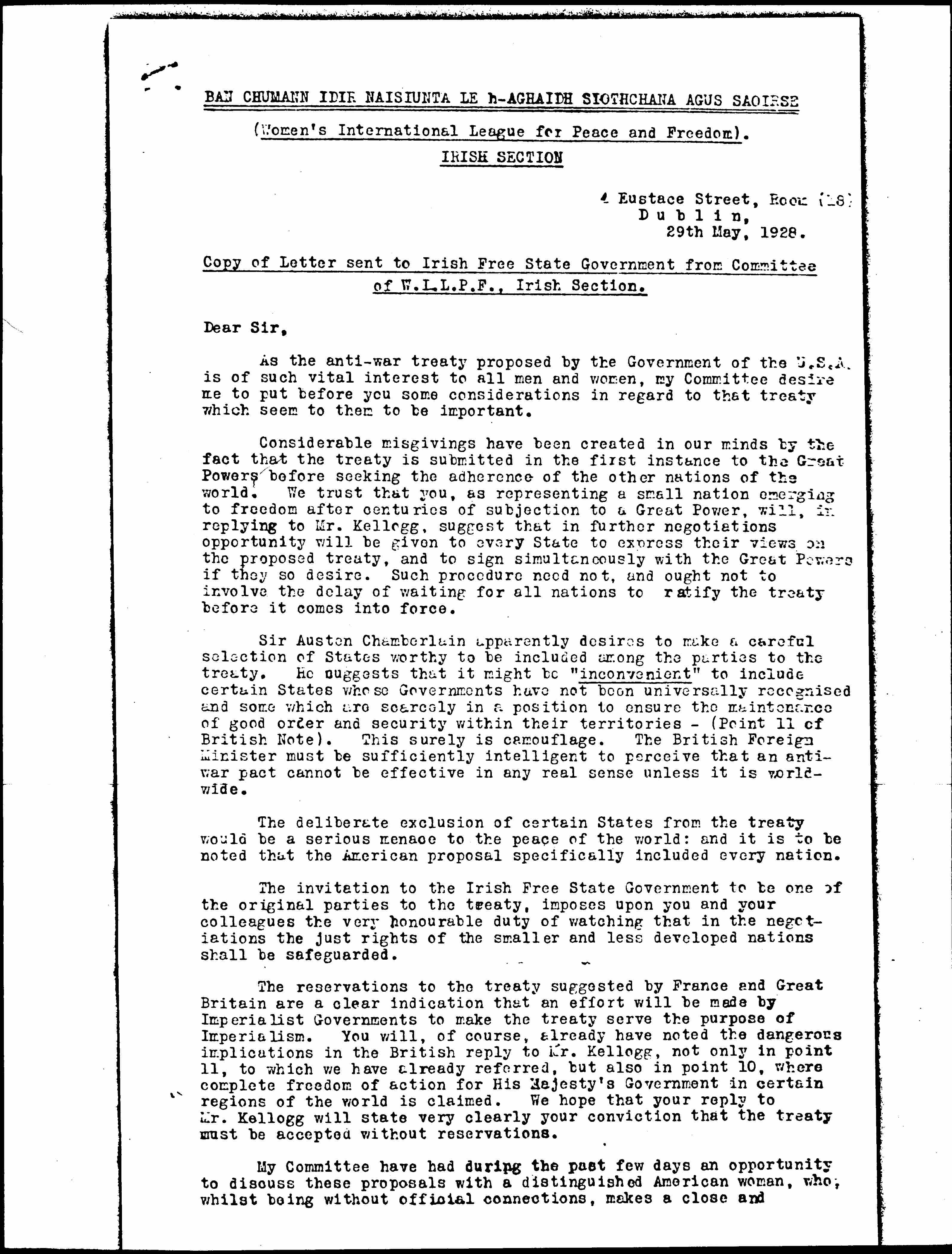
Copy of Letter sent to Irish Free State Government from Committee of W.I.L.P.F. Irish Section.
Dear Sir,
As the anti-war treaty proposed by the Government of the U.S.A. is of such vital interest to all men and women, my Committee desire me to put before you some considerations in regard to that treaty which seem to them to be important.
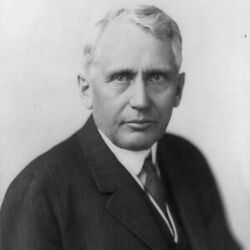
Considerable misgivings have been created in our minds by the fact that the treaty is submitted in the first instance to the Great Powers before seeking the adherence of the other nations of the world. We trust that you, as representing a small nation emerging to freedom after centuries of subjection to a Great Power, will, in replying to Mr. Kellogg, suggest that in further negotiations opportunity will be given to every State to express their views on the proposed treaty, and to sign simultaneously with the Great Powers if they so desire. Such procedure need not, and ought not to involve the delay of waiting for all nations to ratify the treaty before it comes into force.
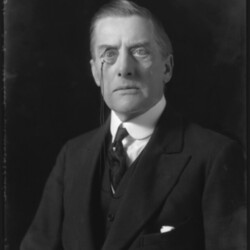
Sir Austen Chamberlain apparently desires to make a careful selection of States worthy to be included among the parties to the treaty. He suggests that it might be "inconvenient" to include certain States whose Governments have not been universally [recognized] and some which are scarcely in a position to ensure the maintenance of good order and security within their territories -- (Point 11 of British Note). This surely is camouflage. The British Foreign Minister must be sufficiently intelligent to perceive that an antiwar pact cannot be effective in any real sense unless it is worldwide.
The deliberate exclusion of certain States from the treaty would be a serious menace to the peace of the world; and it is to be noted that the American proposal specifically included every nation.
The invitation to the Irish Free State Government to be one of the original parties to the treaty, imposes upon you and your colleagues the very [honorable] duty of watching that in the negotiations the just rights of the smaller and less developed nations shall be safeguarded.
The reservations to the treaty suggested by France and Great Britain are a clear indication that an effort will be made by Imperialist Governments to make the treaty serve the purpose of Imperialism. You will, of course, already have noted the dangerous implications in the British reply to Mr. Kellogg, not only in point 11, to which we have already referred, but also in point 10, where complete freedom of action for His Majesty's Government in certain regions of the world is claimed. We hope that your reply to Mr. Kellogg will state very clearly your conviction that the treaty must be accepted without reservations.
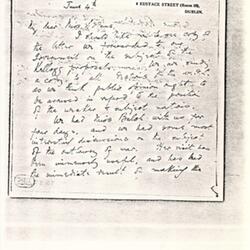
My Committee have had during the past few days an opportunity to discuss these proposals with a distinguished American woman, who, whilst being without official connections, makes a close and [page 2] constant study of public affairs. We have been interested to learn from her what a strong popular movement lies behind these proposals. We surmise, moreover, that the American Government would find it difficult to accept reservations, and that if such were insisted upon, the whole plan might be [jeopardized]. If this should happen it is obvious that it would act as a rebuff to the growing peace mind in America and elsewhere, and intensify militarist and imperialist tendencies.
It is, therefore, desirable from every point of view that the Irish Free State Government should [cooperate] with the American [endeavor] for an unqualified and worldwide renunciation of war.
Finally, we wish to express our conviction that the outlawry of war would be purely theoretical unless immediate steps to institute methods of progressive disarmament accompany the ratification of the proposed [multilateral] treaty, and we very earnestly hope that the Irish Free State Government will use the considerable influence they can exert in [favor] of convening the proposed World Disarmament Conference without delay.
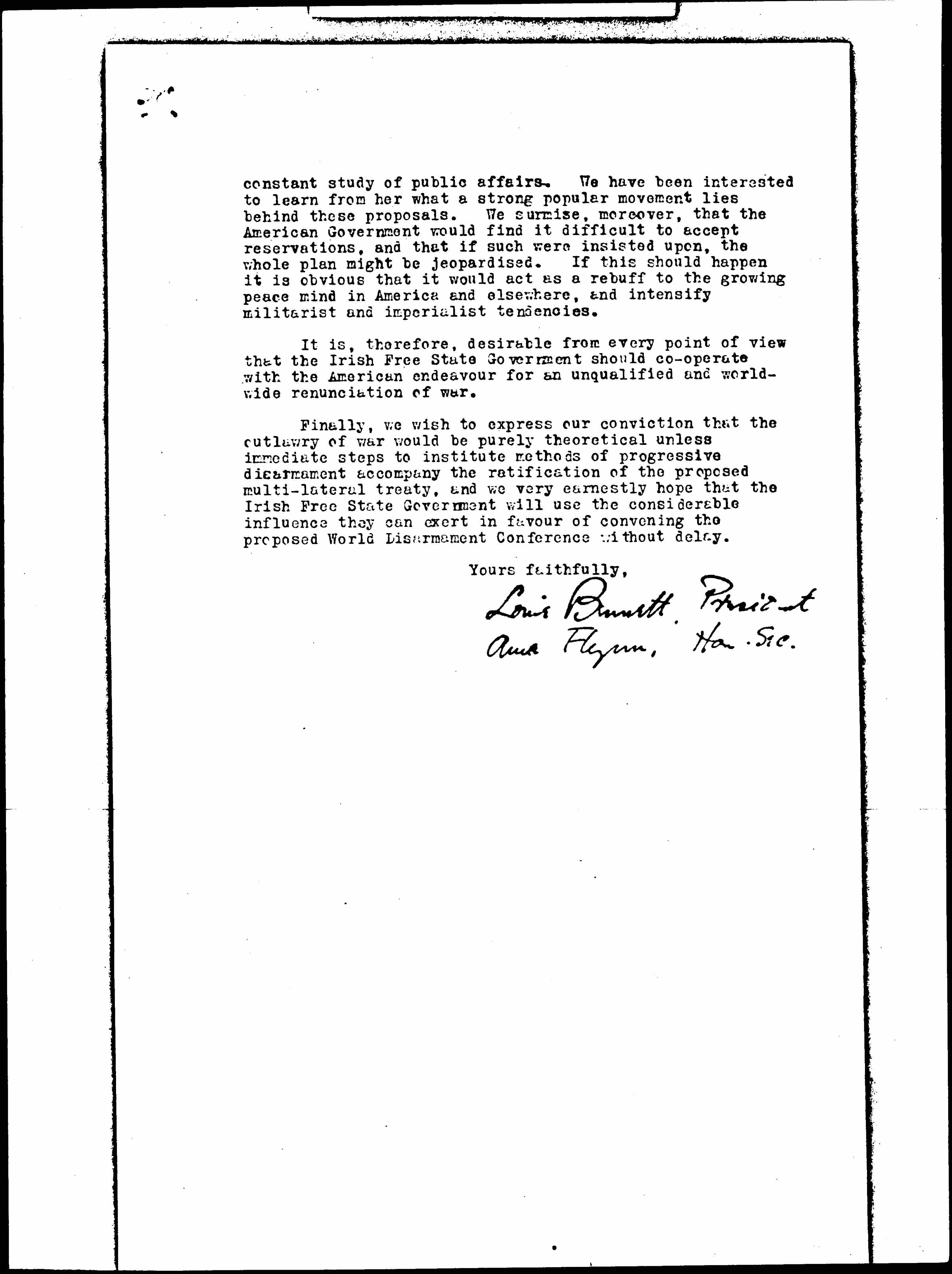
Yours faithfully


Comments