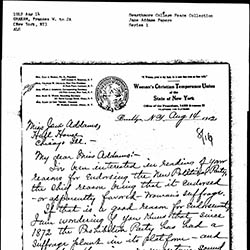
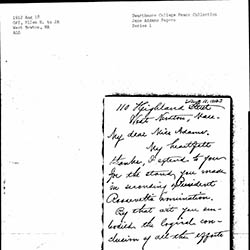
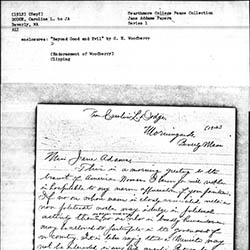
Graham questions Addams' support of the Progressive Party, arguing that the Prohibition Party has included woman suffrage on it's platform for decades.
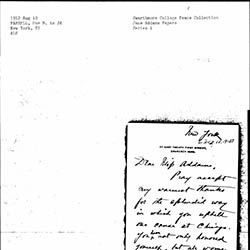
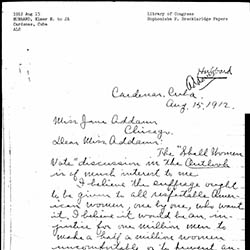
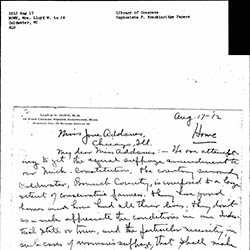
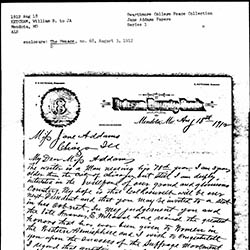
Hubbard writes Addams about his ideas on woman suffrage, arguing that a husband should be allowed to cast two votes, one for himself and one for his wife, if his wife so chooses.
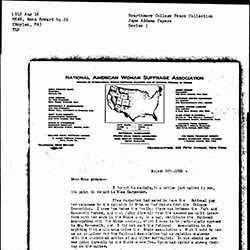
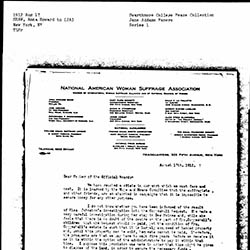
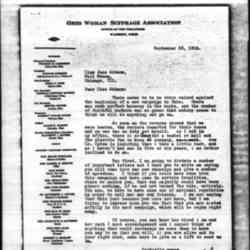
Shaw writes to Addams to clarify the awkward situation between the National and State associations for suffrage in navigating the Theodore Roosevelt and William Howard Taft campaigns.
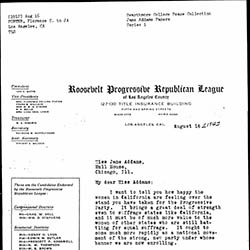
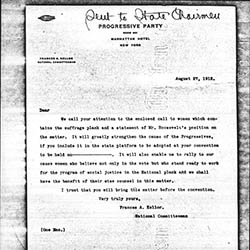
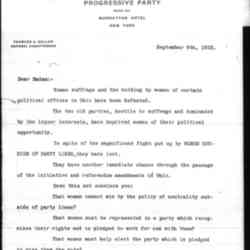
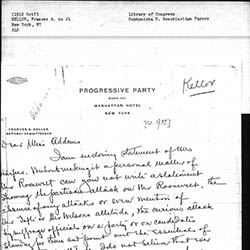
Kellor asks for names and addresses of state and county party chairmen in an effort to engage women in Theodore Roosevelt's campaign for the presidency.
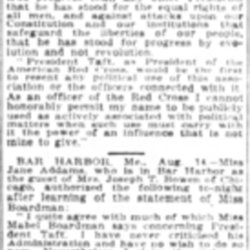
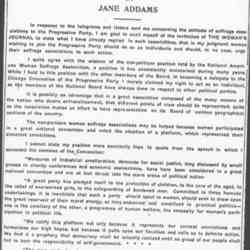
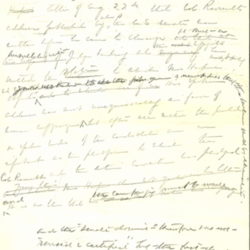
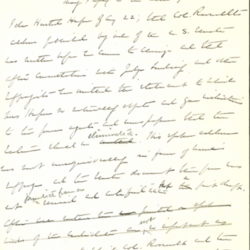
A draft of Addams' defense of Theodore Roosevelt's stance on suffrage as given at the Progessive Party convention in rebuttal of Ida Husted Harper's sharp criticism the candidate. The letter was published on August 25.
A draft of Addams' defense of Theodore Roosevelt's stance on suffrage rebutting Ida Husted Harper's sharp criticism the candidate. The letter was published on August 25.
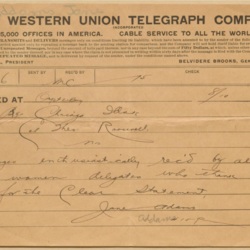
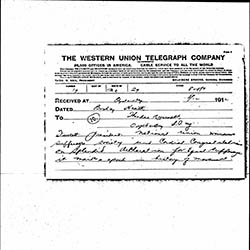
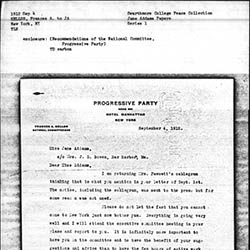
Addams discusses a telegram sent by Millicent Garrett Fawcett to Theodore Roosevelt endorsing his candidacy, plans to publicize the endorsement and Addams's articles on Progressivism.
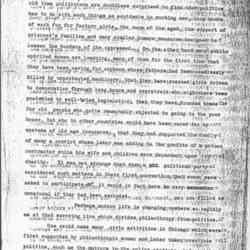
Addams discusses the process by which the government and politicians have taken up philanthropic work and argues that the Progressive Party is taking on many of the reforms philanthropists have been working on for years.
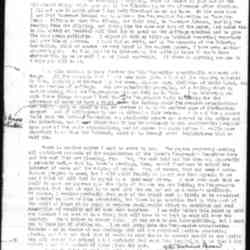
Addams argues for women's increased participation in politics and defends her decision to back a political party. This is one of a series of articles she prepared for the Central Press Association as part of the Progressive Party campaign in 1912.
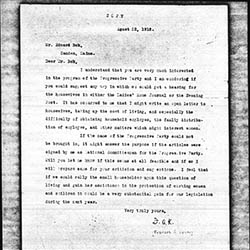
Bok informs Addams that she cannot have an article published before the November election, but he would like her to write one essay per month about new issues women are facing for the Ladies' Home Journal.
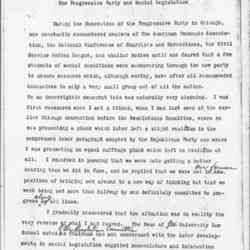
Addams reports on the Progressive Party Convention, discussing how items were added to its platform, particularly labor and military planks, and her dismay about the conventions unjust treatment of African-Americans. This is one of a series of articles she prepared as part of the Progressive Party campaign in 1912.
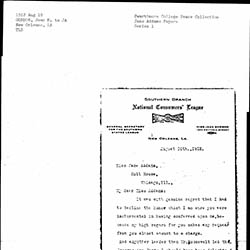
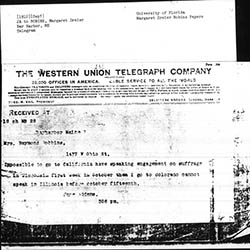
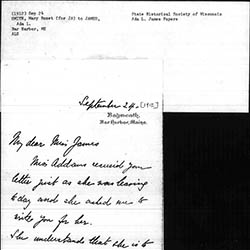
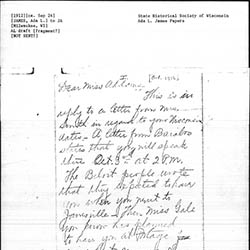
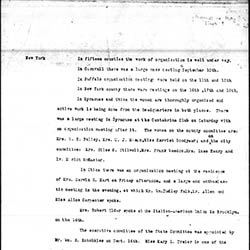
On behalf of Addams, Smith writes James about Addams's speaking engagements in Wisconsin and clarifies that she endorsed the Progressive Party as an individual and not on behalf of the National American Woman Suffrage Association.
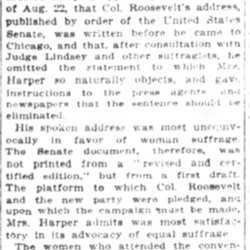
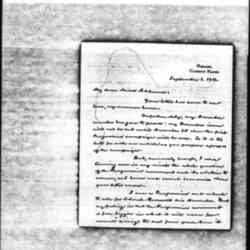
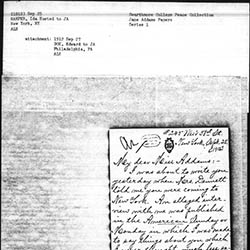
Harper writes Addams to explain something erroneous attributed to her in the newspaper, which were critical of Addams. She also criticizes Addams for seconding Roosevelt.