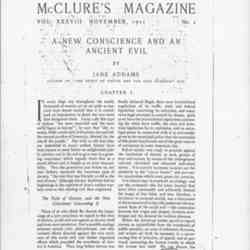
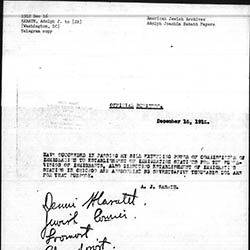
Arguing that white slavery requires an organized movement to defeat it, Addams provides examples from cases in Chicago. This is the first in a five-part series, which would ultimately be published as A New Conscience and an Ancient Evil in 1912.
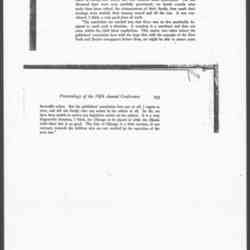
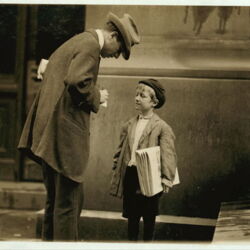
Addams discusses a previous study on newsboys and argues that there are no child labor laws that protect them. These comments were made at the National Child Labor Committee annual meeting in January 1909.
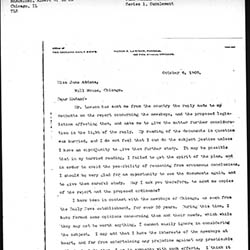
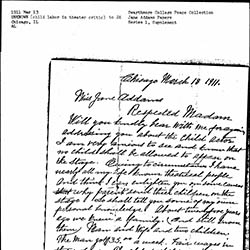
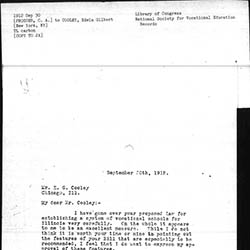
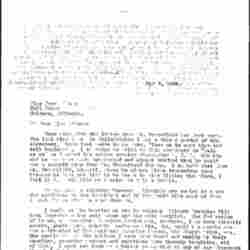
Beaunisne acknowledges seeing the proposed newsboy legislation and admits that he responded quickly and requests the report and proposed ordinance again so that he can give them more careful study. He reports long experience with newsboys and claims sympathy with their condition.
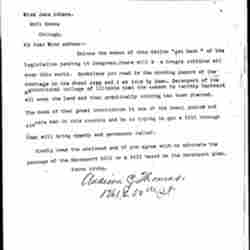
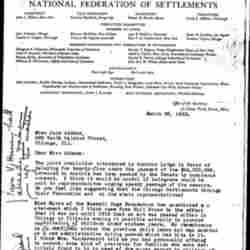
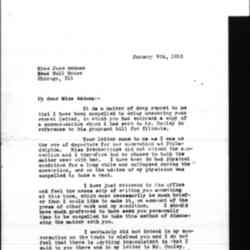
Kennedy asks Addams whether the Chicago Federation of Settlements will write to their representatives to support the Henry Cabot Lodge bill on delaying reparations asks about details of a child labor law.
A suggested amendment to Draft Law proposes that last or only children be exempted from military service and that men pursuing post-graduate study be exempted to preserve teaching and investigation.
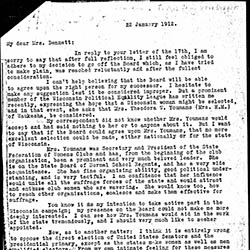
La Follette writes Dennett about her reasoning for going off the board of the National American Woman Suffrage Association, recommends a successor, and shares some political opinions.
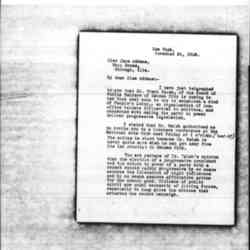
McCarthy asks Addams for financial backing for his plan to hire stenographers to help create and distribute materials and legislative bills for the Progressive Party Legislative Bureau.
After reading Addams' latest article in McClure's Magazine, Cox writes to discuss his experiences preventing women from falling into or remaining in prostitution.
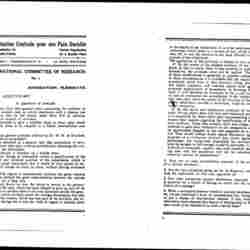
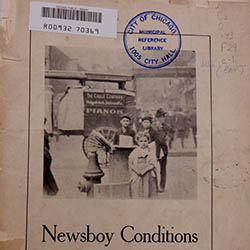
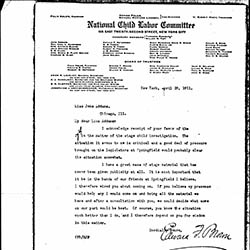
A 28-page illustrated pamphlet outlining the work and social conditions of newsboys and newsgirls, based on a two-day intensive investigation. In it the Committee proposes revisions in child labor laws to curb the worst excesses.
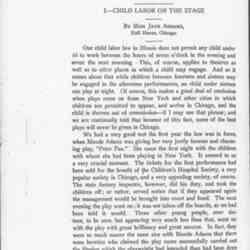
A published version of Addams' lecture on March 11 at the National Child Labor Committee Conference in Birmingham, Alabama, in which she presents arguments against an exception to the 1903 Illinois Child Labor Law for child actors and offers some Tolstoyan allegory to buttress her arguments.
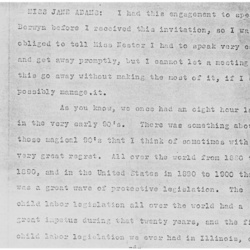
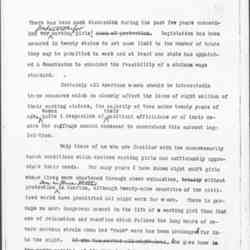
Addams discusses the impact of the proposed Illinois’ “Eight Hour Bill” on both men and women workers. She spoke at a meeting of the Joint Committee for the Women's Eight Hour Bill held at the Morrison Hotel.
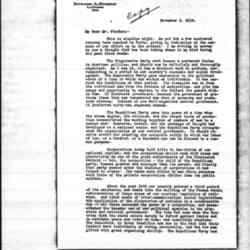
Rumely advises Pinchot that regardless of the outcome of the election, the Progressive Party must become a permanent organization. He provides suggestions on how to accomplish that.