1535 results

  • Tags: Journalism

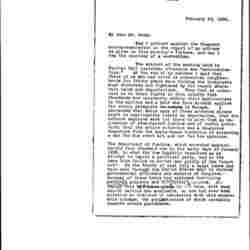
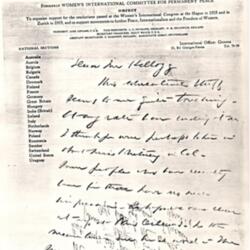
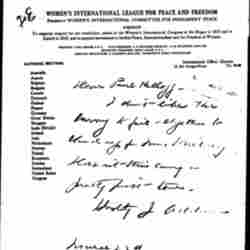
Kellogg sends Addams his article asking for her advice before it is published in The Survey.

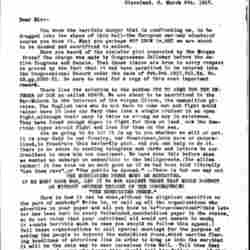
A "Rreal American Citizen" calls for a boycott of subsidized newspapers due to their warmongering.

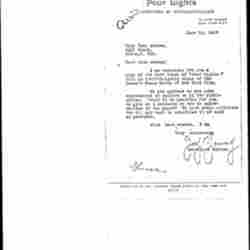
Young asks Addams' opinion on Four Lights, a peace journal.

Oppenheim hopes the Addams will be willing to write an article for Seven Arts.

Kellogg sends word to the Survey's National Council about how the Red Cross is using Paul Kellogg's Venice article.

Kellogg wants to meet with Addams on his return to the United States and sends her an article on the British labor movement.

Ford answers questions about the use of the word "murderer" in regard to soldiers, crediting it to Addams.

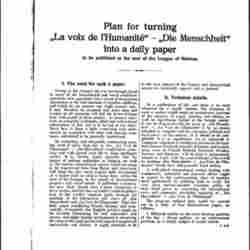
Broda asks Addams to support efforts to create an international daily devoted to the work of the League of Nations.

Addams sends Van Allen a denial that she called soldiers "murderers," a claim made by reporter Edward Marshall while she was in Europe.

Beck writes to Addams about a statement she allegedly made about soldiers.

Salomon asks Addams for help securing writing jobs with American periodicals.

Risher interviews Addams about her politics at the Rock Island train station.

Kellogg sends Addams a Lyman Gage article that he thinks she may find useful.

Kelley criticizes Kellogg's decision to print an unsubstantiated claim that Addams was under investigation by the Department of Justice.

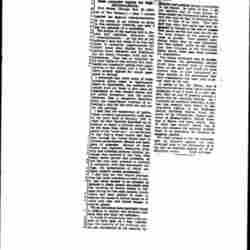
The Survey corrects the February 7 article that indicated that Addams was under surveillance by the Justice Department.

Kellogg apologizes to Addams for publishing an item in The Survey about possible Department of Justice surveillance of Addams.

Addams accuses the editor of the Chicago Tribune of unfair coverage of her address, and explains her position on political deportations.

Addams accuses Beck (the editor of the Chicago Tribune) of misleading coverage of her address at the Auditorium and demands a correction be published.

Also known as Jane Addams to the Editor of the Chicago Tribune, February 23, 1920

Addams accuses the editor of the Chicago Tribune of unfair coverage of her address, and explains her position on political deportations.

Addams comments on Kellogg's recent discussions about Anita Whitney.

Addams tells Kellogg that The Survey should be more forceful in its defense of Anita Whitney.

Kellogg tells Addams about a plan to increase subscribers to The Survey through local meetings.

Addams contacts Colby to ask the State Department to protest Finland's arrest of John Reed.

Kellogg asks Addams whether she has an updated information on World War I prisoners of war that the Survey could use.

Kellogg tells Addams that Christina Krysto will write about Anita Whitney's case.

Kellogg informs Addams about a follow up meeting of the Directors of Survey Associates.

Addams sends Glascock an article from the London Times (not found) and thanks him for the telephone interview.

Jennison tells Thomas that Herbert Gaston seeks information on European relief.

Seager sends Addams a list of potential members of The Survey National Council for her comment.

Addams praises the World for its promotion of disarmament.

Kirchwey tells Addams that The Nation may not be able to publish an article on Upper Silesia.

Pilcher asks Addams to send her publicity on the Women's International League for Peace and Freedom Summer School for use in American newspapers.

Pilcher sends Addams a letter from Floyd Gibbons (not found) and welcomes any news from Addams.

Pew seeks Addams' opinion of the Washington Naval Conference for broad news release.

Wollenberger tells De Vry that he supports Addams's request to aid Anna Lindmann and has sent her letter to German-American newspapers.

Kellogg tells Addams that the new Survey-Graphic will be sent and asks for her feedback.

The Chicago Tribune retracts a statement it published based on Addams's claim that she was misquoted.

Addams sends Wacker a correction about reported statements she made on Germany's need for aid.

Balch and Mead complain to the Washington Post about errors in its reports of theWomen's International League for Peace and Freedom's Mass Meeting.

Mead tells Addams about the aftermath of the Women's International League for Peace and Freedom's Mass Meeting and the inaccurate coverage in the press.

Addams provides the Tribune with details of the resolutions passed at the Women's International League for Peace and Freedom's United States Section's Mass Meeting and discusses the parade. The Tribune includes a quote from the statement that Addams argued was incorrect.

Addams writes to the Tribune to correct reports about the Women's International League for Peace and Freedom's United States Section's Mass Meeting in Washington.

Neil congratulates Addams on her humanitarian work and criticizes the Chicago Tribune's editorial.

McDowell sends Addams her protest to the Chicago Tribune about an editorial that criticized Addams.

McDonnell tells Beck that his critical editorial about Addams, published in the Chicago Tribune, is wrong.

Merriam advises Addams to ignore the Tribune's attack on her activities as they always attack liberals.

Post writes Addams about the problem of the Odells and the inaccurate press following the Women's International League for Peace and Freedom's United States Section' s Mass Meeting.

Post consults with Addams about how the Women's International League for Peace and Freedom's United States Section should respond to inaccurate news coverage of their 1921 conference.
Output Formats

Export results to CSV,