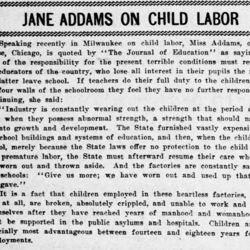
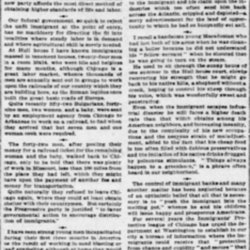
Addams describes child labor and education in Chicago, especially among immigrants. This is a slightly modified version of "Child Labor and Pauperism," which had earlier appeared in the proceedings of the National Conference of Charities and Correction. It is also the full version of the "Child and Pauperism" fragment.
Addams provides reasons for disarmament as a means to better the economy, reduce unemployment and taxes, and improve international relations. She gave the speech at the Eccleston Guildhouse in London on September 18, 1921.
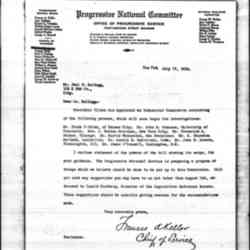
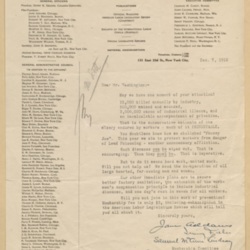
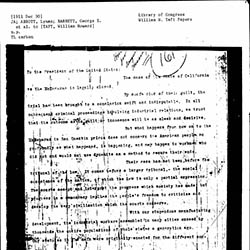
Addams and a number of other leaders petition President Taft to open a commision to study the conditions of labor, its relation to the government, the cost of strikes, and trade unions.
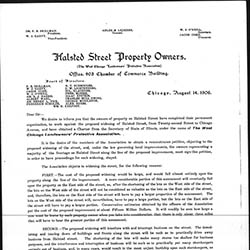
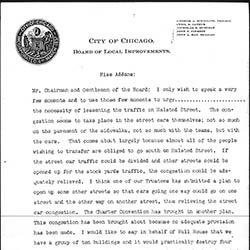
Addams testifies before the Board of Local Improvements in opposition to the widening of Halsted Street because of its potential impact upon Hull-House.
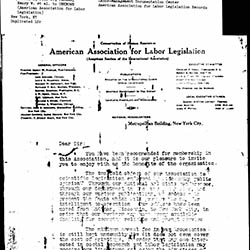
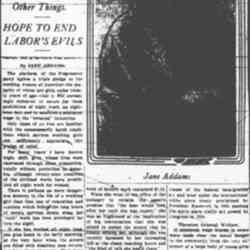
Addams argues for a minimum wage for female workers. This is the third article of a monthly, year-long series on economic and social reform in America and women's role in affecting change.
Addams' speech to the first National Arbitration and Peace Congress of America, given in New York at an evening session at Carnegie Hall. Addams discusses a rejection of warfare and military might as the only means to display patriotism, suggesting instead that people look for examples in industrial progress. The speech was published in the Congress Proceedings, and later edited by hand.
Hull summarized and outlined works by David Starr Jordan, French Ensor Chadwick, Henri Lambert, and John Atkinson Hobson, for discussion and adoption by the Central Organization for a Durable Peace.