80 results

  • Tags: Industry
  • Item Type: Text

Blake tells Addams her views on sending a Women's International League for Peace and Freedom delegation to India.

Also known as Commencement Address at Connecticut College, June 16, 1930 (excerpts)

Addams discusses the role of workers and women in modern life.

Kellogg tells to Addams about the work of the Charles Cabot and the Cabot Fund to support the rights of steel workers.

Bliven describes the work of the Russian Reconstruction Farms and Harold Ware.

The Bureau reports on industrial accidents in New Jersey, Massachusetts, and Wisconsin.

Addams contributes to an anthology suggesting that when business develops a code of ethics, it will begin to serve mankind.

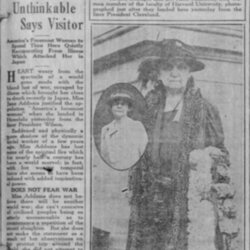
Addams gives an interview after landing in Hawaii discussing peace in Europe, and other topics.

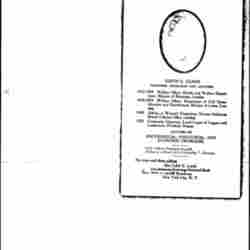
A circular regarding Leach's American lecture tour, featuring discussions on welfare work and industrial relations.

Addams provides reasons for disarmament as a means to better the economy, reduce unemployment and taxes, and improve international relations. The speech was given at the Eccleston Guildhouse in London and then published.

Addams provides reasons for disarmament as a means to better the economy, reduce unemployment and taxes, and improve international relations. She gave the speech at the Eccleston Guildhouse in London on September 18, 1921.

Dulles explores the implications of the World War I reparations on the world's economy. The speech was initially delivered at the League of Free Nations Association on March 12, 1931 in New York and then published in the New Republic.

Cripps argues that Europe in a single industrial unit and a punitive peace treaty will impact all countries.

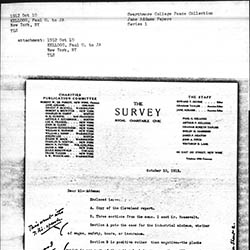
Kellogg sends Addams some material regarding The Survey and industrial articles.

Hull summarized and outlined works by David Starr Jordan, French Ensor Chadwick, Henri Lambert, and John Atkinson Hobson, for discussion and adoption by the Central Organization for a Durable Peace.

Karsten asks for information on a dehydration plant the company hopes to sell.

De Wolf refuses to fund Hull-House's camp program because of his disapproval of Hull-House's support for workers and unions and calls for it to divorce itself from politics, labor issues, and religion.

Bourland could not find a spot for Thomas to speak but believes that she could speak in Chattanooga.

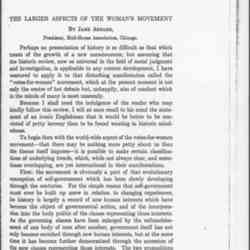
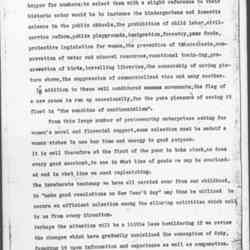
Addams details the many reasons why it is important that women be given the right to vote, and of how the suffrage movement is not just found in Western nations, but globally.

Addams expresses why the time is now that women should be able to vote, with in regards to the social power women have which can be used for political power.

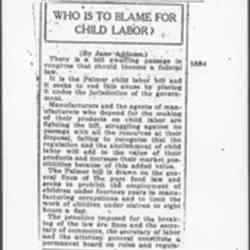
Addams, discussing the main reasons for why child labor is wrong, how it came to be, and who can be blamed for it.

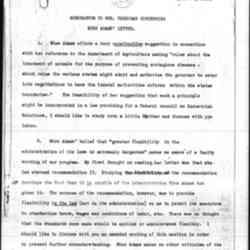
The memorandum examines Addams' suggestions on the Commission's report.

Addams has sent Harriman materials on the creation of a central authority on industry so the federal government could enforce labor laws.

The Commission on Industrial Relations sends Harriman their recommendations for improvements on women in industry to get her feedback.

Addams addresses the attendees in the opening speech for the start of the Tenth Annual Conference on Child Labor in New Orleans.

Murtland asks Addams for constructive criticism of the work and plans of the National Society of Vocational Education.

The Commission identifies problems regarding the labor of women and children and recommends solutions.

A report of the work of the Department of Social and Industrial Justice, regarding legislative efforts concerning industrial accident insurance.

Lindsay sends Kellogg a plan for the Progressive Party's Department of Social and Industrial Justice.

Kellor sends Kellogg the names of members of President Woodrow Wilson's Industrial Commission and seeks ideas for topics for investigation.

Lovejoy asks Addams for news about the Illinois Governor's decision regarding an appropriation for the Department of Factory Inspection.

Addams argues for a minimum wage for female workers. This is the third article of a monthly, year-long series on economic and social reform in America and women's role in affecting change.
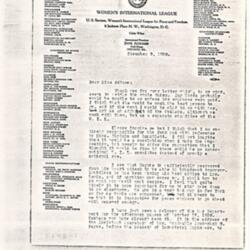
Pinchot clarifies his ideas about the Progressive Party's agenda going forward.
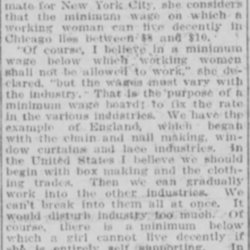
Addams asks Blaine to support Edith Wyatt's efforts to appoint a better stockyard inspector.

Addams comments on the minimum wage for women while in New York, arguing that women workers in Chicago should earn between $8-10.

Davies explains his attitudes about child labor and the misunderstandings about them.

Addams et al. ask Washington to join the American Association for Labor Legislation campaign.

Addams discusses the labor situation in Chicago and argues that the Progressive Party will support the work of trade unions.

Addams discusses working conditions for women and advocates for a minimum wage for female workers.

Kellogg reports on Louis Brandeis's attacks on the Progressive Party.

Kellogg sends Addams materials regarding Progressive Party politics.

Addams describes the Progressive Party's pledge to support new immigrants by creating protection for industrial laborers.

Addams argues for the implementation of a minimum wage for female workers.

Lindsay provides names of potential members to work on a Federal Commission on Industrial Relations.

Devine tells Addams that he revised an editorial and that Taft wanted to appoint her as a member of the Industrial Commission.

Taylor informs Addams of action being taken to protest against a candidate running for office on the Industrial Relations Commission.

Browse tags for all documents:

Output Formats

Export results to CSV,