151 results

  • Tags: Crime Enforcement

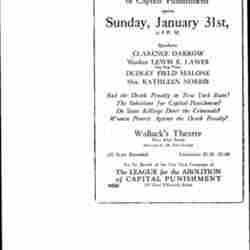
A flyer advertises a public event to promote efforts to end the death penalty in New York. This was held on January 31, 1927.

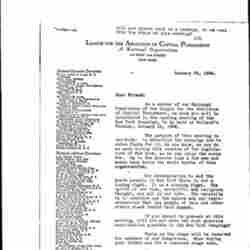
Lawes asks Addams to donate funds to help abolish the death penalty in New York.

Armes describes Russian refugee Jan Pouren's efforts to enter and remain in the United States.

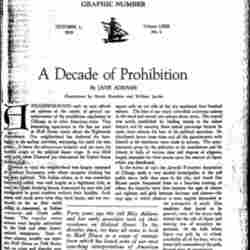
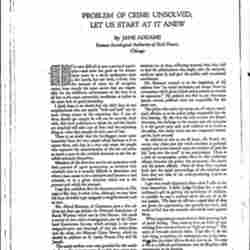
Addams describes the positive impact of Prohibition and argues for better enforcement and disarmament in order to improve things.

Addams discusses the increasing rate of juvenile crime and the efforts to combat it at a meeting of the American Crime Study Commission.

Addams responds to judges ordering parents to administer corporal punishment to juvenile delinquents. This was part of a longer new article.

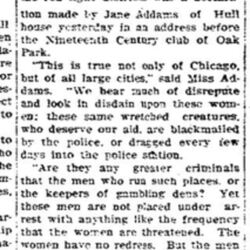
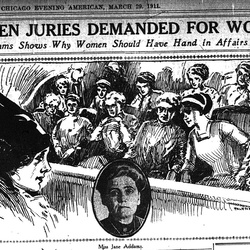
Addams argues that woman suffrage might impact the plight of fallen women who are preyed upon by men.

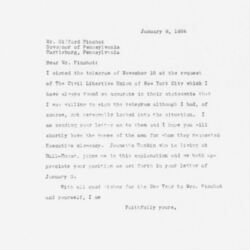
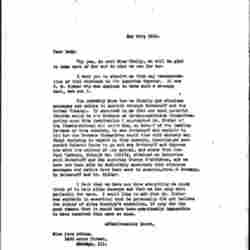
Addams tells Pinchot that she will send his letter to the American Civil Liberties Union to answer his questions about clemency.

Stahl criticizes Addams for her opposititon to capital punishment.

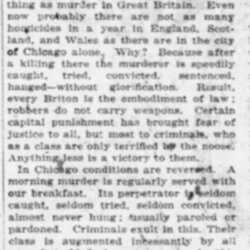
Rich disputes Addams's views on capital punishment, claiming that sentimental opposition results in more crime.

Knox takes issues with Addams's opposition to capital punishment, offering examples of English justice.

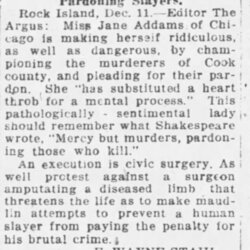
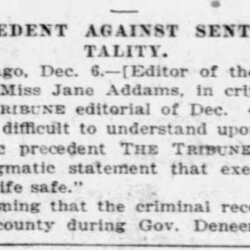
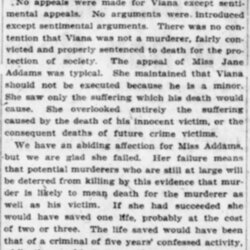
The Tribune praises Governor Lowden's decision to allow Nicholas Viana to be executed and calls Addams's appeal sentimental.

Addams discusses the increasing rate of juvenile crime and the efforts to combat it at a meeting of the American Crime Study Commission.

Collins informs Addams of efforts in Colorado to lobby for a commutation of Nicholas Viana's death sentence.

A "Friend to Man" asks Addams to give a Bible to Nicholas Viana and hopes that his execution will be stayed.

American Civil Liberties Union defines its stance on first amendment rights, labor rights, law enforcement, immigration and racial equality.

Taylor and Addams discuss the arrest of Abraham Isaak.

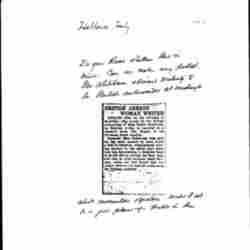
The article covers the arrest of Emily Hobhouse by British authorities.

Addams argues for woman suffrage claiming that women need to protect their legal rights.

Wald writes Addams about efforts to communicate with Germany and Austria about charges against Alice Masaryk.

Addams details the many reasons why it is important that women be given the right to vote, and of how the suffrage movement is not just found in Western nations, but globally.

Addams explains how educational background, economic situations, and family predicaments have an impact on juvenile crime; and she argues for special treatment of the "juvenile adult." This is the tenth article of a monthly, year-long series on economic and social reform in America and a women's roles in affecting change.

Addams explains how educational background, economic situations, and family predicaments have an impact on juvenile crime; and she argues for special treatment of the "juvenile adult." The article was published in October 1913.

Addams explains the evils of unpaid prison labor. This is the fourth article of a monthly, year-long series on economic and social reform in America and a woman's role to affect change.

Addams defends the Progressive Party plank that calls for the salaries earned by prisoners to be sent to support their dependent families.

A narrative describing the social and economic background of four men convicted of murdering Frank Guelzow.

Also known as Lynched Two in Ten Days, May 22, 1911

Newspaper report of the lynching of six black men in Lake City, Florida, accused of murdering Robert B. Smith, a prominent white man.
Output Formats

Export results to CSV,