91 results

  • Tags: African-Americans
  • Item Type: Text

Lee thanks Addams for her statement in the article Has "Has Emancipation Been Nullified," and praises Abraham Lincoln, and discusses slavery and the virtues of liberty.

In this address given at the 13th Annual Conference for the Study of the Negro Problems held at Atlanta University, Addams discusses the difficulties immigrants face in Chicago.

Dunbar-Nelson invites Addams to join the American Interracial Peace Committee.

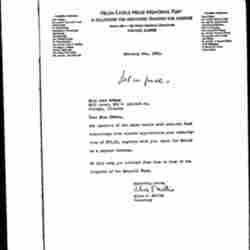
Millis shares appreciation for Addams' donation on behalf of the Helen Castle Mead Memorial Fund.

The anonymous African-American correspondent chastises Addams for sacrificing African American rights for woman suffrage.

Flexner sends Addams his letter to Lillian Wald about the lynching in Livermore, Kentucky.

The Urban League reports the organizations, government agencies, and newspapers that it works with and describes its activities, including employment and welfare work.

Addams is one of a number of people who sign a call for a conference to examine the situation of African-Americans since emancipation. Various versions of the call appeared in newspapers across the country.

Woolley praises Addams for standing up for African-Americans at the Progressive Party Convention.

Woolley thanks Addams for sending an article and discusses her views on Theodore Roosevelt.

Dennis tells Addams that he will be out of the city and cannot participate in the National Association for the Advancement of Colored People dinner.

In this article, Rayner advocates for the advantages for African Americans to attend college.

The Colored Woman's Civic Club thanks Addams for her support black rights at the Progressive Party Convention.

Article about the creation of a permanent committee, on which Jane Addams was invited to serve, coming out of the Conference on the Status of the Negro.

Murphy writes Addams to tell her that her new book is an inspiration to him and shares some of his own ideas about children and the treatment of African Americans in the North and South.

Ware asks Addams for advice for a fundraising visit to Chicago to benefit Atlanta University.

Walker writes Bill to resign from the 23rd Assembly District Progressive Club, citing Theodore Roosevelt's denial of full rights to African-Americans in the South as sinful and shameful.

Embree asks Addams for a book on Mexicans in Chicago and suggests she consult with Franklin McLean on his work on Black medical care.

Pearl writes Addams for advice about starting a settlement house for African Americans.

Wells informs Ware that Addams is out of the city, and his letter has been given to Sophonisba Breckenridge, who in interested in the advancement of African-Americans.

Deknatel writes on Addams behalf, disputing an article which states that she is in favor of lynching African-Americans.

Cook thanks Addams for her defense of black Americans and urges her to continue to be a voice during the Progressive Party campaign for the presidency.

Pinkett praises Addams' defense of immigrants in her article in Charities and Commons and relates the persecution of immigrants to that of African-Americans.

Addams chastises American society for failing to live up to the ideals of the Emancipation Proclamation and demands political equality for black Americans.

Gregg tells Addams why he believes that the Hampton University Library School will not set back the cause of desegregation in the library profession.

Durkee tells Addams that Howard University is willing to host delegates from the International Congress of Women.

Addams asks Woods about a small fund drive to cover printing costs and inviting more Black pacifists to the Women's International League for Peace and Freedom.

Addams sends Blaine literature on the work of the Chicago Urban League.

Addams asks Blaine for a donation to support an African American settlement in Chicago.

Addams asks Blaine to assist Oswald Villard with the organization of Chicago efforts related to the Association of the Advancement of Colored People.

Addams writes about the changes Blaine suggested for the Joint Committee to Secure Equal Justice for Colored Riot Defendants.

Addams writes Crane about a misunderstanding in regard to the leadership of the National American Woman Suffrage Convention in Louisville, Kentucky.

Addams sends Arthur information about the International Congress of Women and hopes that he will support Addie Hunton's travel costs.

Addams thanks Johnson for sending her a copy of his new book, The Book of American Negro Spirituals.

Addams notes a discussion in the news about creating segregated schools and is calling a meeting at Hull-House to discuss it.

Addams agrees with Terrell's objection to calling for the removal of black French troops in Germany and invites her to attend the local meeting where the issue is on the agenda.

Addams reports on events in New Orleans at the Methodist Missionary Conference, including attending a talk by Booker T. Washington. She also writes about changes in her travel plans and how she wishes that Smith was with her.

Addams notes that she sent Haldeman a copy of Du Bois' "Souls of the Black Folk," and asks after Marcet's health.

Addams declines Du Bois invitation to the Atlanta Conference on Negro Problems due to a glut of commencement speeches on her schedule.

Addams advises Du Bois on using funds from the Crisis to pay costs of investigating the history of Black troops in Europe.

Jones reacts to an article that Addams sent him on the Progressive Party, focusing on her statements about African Americans and the peace movement.

Spingarn writes to Kellogg that he is eager to help the Progressive Service and offers a suggestion on how best he might do that.

Rayner sends Addams an article he wrote about the benefits of farming for African Americans.

Also known as Lynched Two in Ten Days, May 22, 1911

Newspaper report of the lynching of six black men in Lake City, Florida, accused of murdering Robert B. Smith, a prominent white man.

Browse tags for all documents:

Output Formats

Export results to CSV,