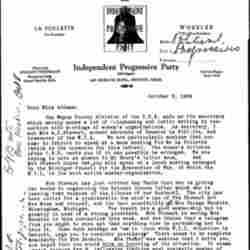
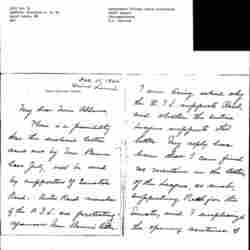
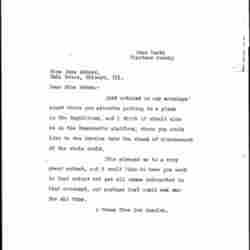
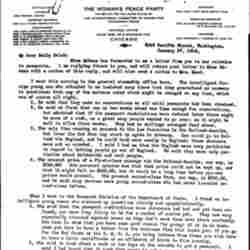
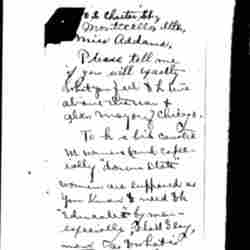
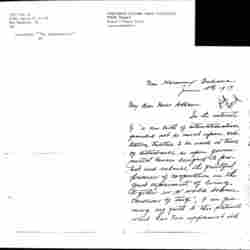
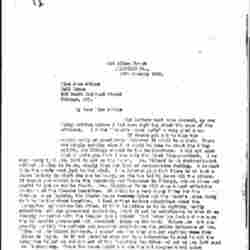
Jennison invites Addams to speak at a Michigan meeting in support of Robert La Follette's presidential campaign and to help get the Women's International League for Peace and Freedom's Detroit Branch going again.
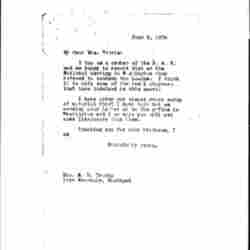
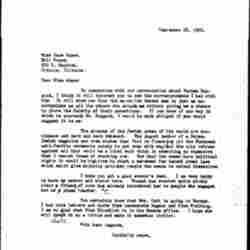
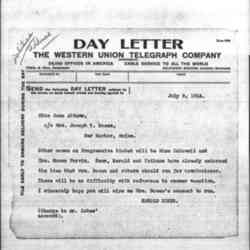
Addams tells Travis that the Daughters of the American Revolution's condemnation of the Women's International League for Peace and Freedom is not the work of the national organization, but only of some local chapters.
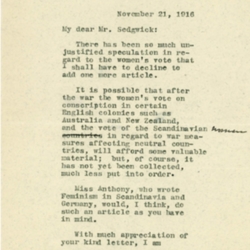
Balch brings to the attention of Addams that Polish women have been denied a say in their League of Nations and urges all sections of the Women's International League for Peace and Freedom to fight for recognition of their voting rights.
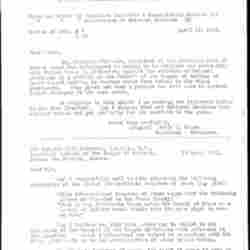
Balch asks Addams about whether the Women's International League for Peace and Freedom should advertise about their efforts in European women's journals.
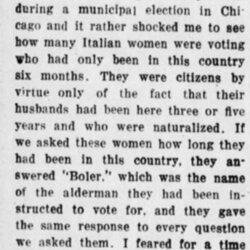
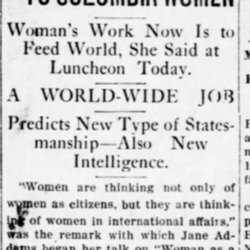
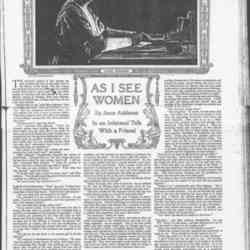
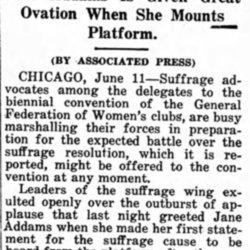
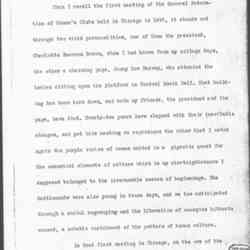
At the Biennial Federation of Women's Clubs, Addams discusses the problems of associating the right to vote with marital status of the husband, telling of experiences with immigrant women voting in Chicago.
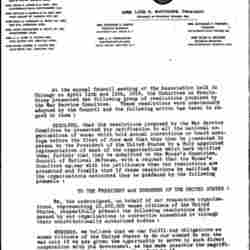
The Association of Collegiate Alumnae proposed various ways in which women may be included in the war effort and maintain ranks alongside men, primarily as nurses but as other medical specialists as well.
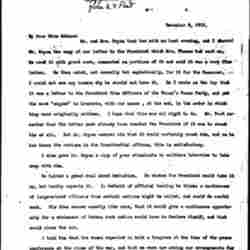
Post relates to Addams her conversation with William Jennings Bryan about the Woman's Peace Party's letter to the President and plans for a Congress after peace is achieved in Europe.
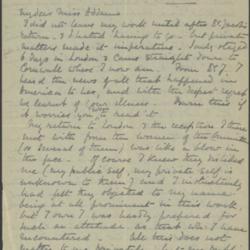
Addams writes to Sheehy Skeffington about representation, particularly for women and Ireland, within the International Committee of Women for Permanent Peace.
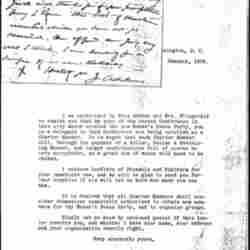
Addams informs Robins of her selection as a member of the Cooperating Council in the Woman's Peace Party and expresses her hope that she will serve as a representative.
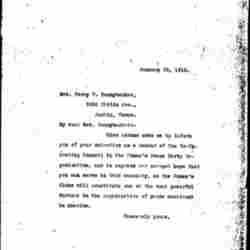
Addams informs Pennybacker of her selection as a member of the Cooperating Council in the Woman's Peace Party and expresses her hope that she will serve as a representative.
Addams informs McDowell of her selection as a member of the Cooperating Council in the Woman's Peace Party and expresses her hope that she will serve as a representative.
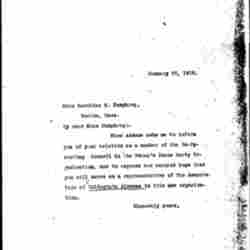
Addams informs Humphrey of her selection as a member of the Co-Operating Council in the Woman's Peace Party and expresses her hope that she will serve as a representative.
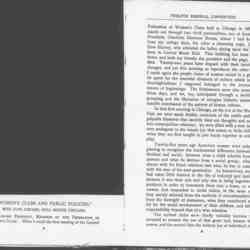
Speech given by Addams at the Biennial Convention of the General Federation of Women's Clubs, concerning the role women's clubs has and can further have in shaping policies.
Speech given by Addams at the Biennial Convention of the General Federation of Women's Clubs, concerning the role of women's clubs in shaping public policies.
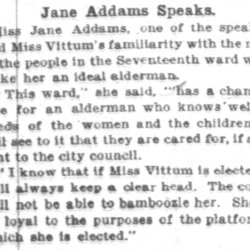
Addams recaps the events of a recent local Chicago election where women were allowed to vote and shows that women voters can be helpful to social reforms by being partisan voters.
Addams' November 30 address at the annual meeting of the National American Woman Suffrage Association discusses the meaning of suffrage, the changing political climate, and the connections between politics and social improvement.
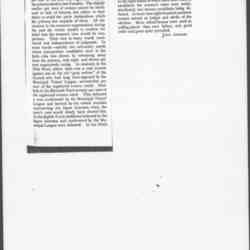
In this published version of a speech given to the Chicago City Club on November 7, Addams discusses party politics, the viability of independent parties, and the possibilities of women's role in municipal elections in Illinois.
Addams discusses party politics, the viability of independent parties, and the possibilities of women's role in municipal elections in Illinois. This speech was given to the Chicago City Club.