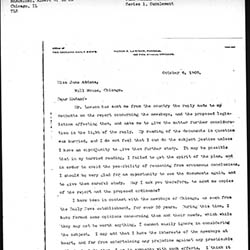
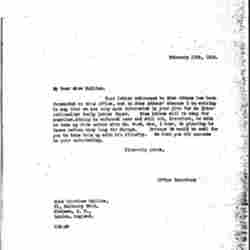
Beaunisne acknowledges seeing the proposed newsboy legislation and admits that he responded quickly and requests the report and proposed ordinance again so that he can give them more careful study. He reports long experience with newsboys and claims sympathy with their condition.
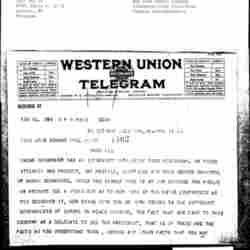
Jacobs apologizes about an article in the New York Times that will mention Addams and will interfere with Jacobs' meeting with President Wilson. Jacobs also mentions a financial situation with Schwimmer.
Jacobs, Macmillan, and Manus write to Addams to congratulate her on Ford's gift as well as to request her presence at a meeting in Amsterdam, stating that they may postpone it if necessary.
Post consults with Addams about how the Women's International League for Peace and Freedom's United States Section should respond to inaccurate news coverage of their 1921 conference.
The author sympathizes with the McNamara brothers, who bombed the Los Angeles Times building in California in October 1910, because they were insane but criticizes the Chicago newspapers for responding with bigotry against the Irish community.
Addams received a copy of this anonymous letter, offering a scathing impression of Chicago politicians out to get Police Chief John McWeeny and criticizing the Chicago Tribune as corrupt. The writer uses derogatory names, like "Sneaky" and "Sissy," for many of the characters and calls the press the "Scrofulas."
Bok's questions for a series of interviews with Jane Addams and other prominent women are intended to find an explanation for women's "unrest" and the factors that have led to their discontent.
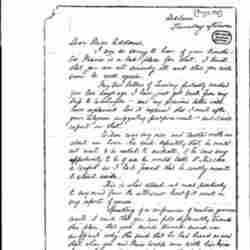
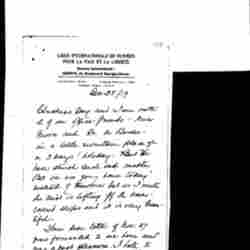
Balch tells Addams about the American peace movement, office work at the Women's International League for Peace and Freedom, and questions about where the organization should become involved.
On behalf of the parents of 25,000-30,000 cadets in the United States, Nelson takes acception to Addam's derogatory use of the word "cadet" in her article in McClure's.
Macmillan offers a defense against malicious statements about the company circulating in Chicago. Brett hoped to clarify the issue with Addams, who was a member of the school board and might help.
Thomas writes to Van Slingerland on behalf of Addams to thank her for sending a complimentary issue of her magazine as well as to reject her offer of a reprint.
Zevin writes Addams soliciting a brief statement regarding the disenfranchisement Jewish people are facing in Europe and the United States during World War I.
Addams informs Beveridge that she will be speaking at the Progressive Party's Lincoln's Birthday Dinner and mentions newspaper criticism for her non-partisan stance in municipal affairs.
Addams agrees with Sedgwick that the names of the authors does not need to be included with the article. Addams has also asked Balch to take on communications with Sedgwick.
Addams enclosed a poem from a soldier fighting in World War I and offers it for use to Kellogg. Addams further explains her reasons and hesitations in providing reviews of nine books Kellogg had sent her.
Addams expresses frustration to Schwimmer regarding her illness, as it proves to be a major inconvenience in planning the international committee meeting, and has hindered her from traveling to Europe with Ford's peace ship.
Scott apologizes to Smith for word getting out about Addams's illness and reports that Benjamin Fleisher of the Advertiser will meet with Addams and tell her more.