63 results

  • Subject is exactly "political participation"

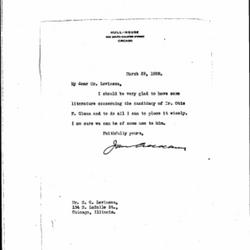
Addams tells Levinson she will be happy to help support Otis Glenn's run for the Senate.

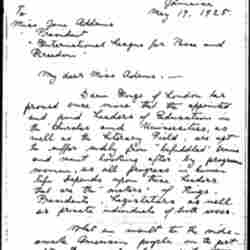
Sheba tells Addams about her religious beliefs that the current leaders of religion are corrupt and inept.

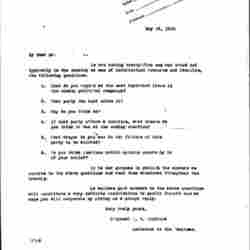
Penfield sends a questionnaire on issues in the upcoming election and the best party to solve them.

Hamilton writes Addams hoping to conceive her to run for president of a committee.

Addams tells Smith about her work in the Congress and involvement with the Hoover team.

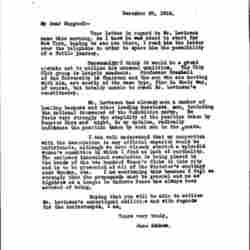
Addams explains the potential value of Levinson's skills and notes the role Women's Clubs will play in the peace agenda.

Upton tells Addams that she opposed the message that NAWSA Executive Committee sent to the government regarding the war.

Root discusses plans for peace and political education with Addams and thanks her for the Long Road of Woman's Memory.

Forbes criticizes individual members acting as if their views represent those of the organization as a whole. She expresses opposition to the Woman's Peace Party urging a national referendum.

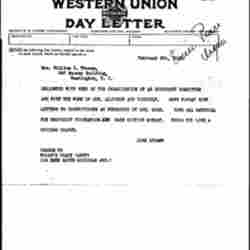
Addams is delighted by Thomas's work with the Emergency Committee and wants her to organize a meeting.

Taussig admires the statement which Addams plans to send to the President.

Spencer approves of her name being included on a telegram to President Wilson.

Post is happy to contribute her name on a telegram.

Johnson sends funds to help the fight against militarism and recommends uniting the peace societies and sending President Wilson support.

Members of the Pre-Primary Committee urge Addams to communicate with her district's candidates.

Karsten tells Stokes that she has filled out cards regarding political candidates because Addams cannot do it in time.

The League prepares a questionnaire for candidates for the Illinois State legislature in order to develop recommendations.

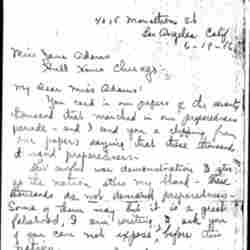
Fox tells Addams about preparedness parades in Los Angeles and questions whether the organizers are profiting by the war.

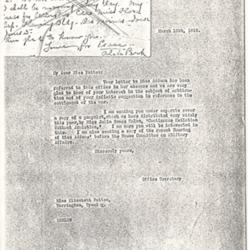
Karsten writes to Patten about Addams's appearance at the House Committee of Military Affairs.

La Follette reports getting Thomas's telegram and is hopeful that Congress may support a Resolution gathering neutral nations for world peace.

Post relays the information about the fundraising needs of the Woman's Peace Party and sends charter members leaflets for them to use.

Tufts asks Addams to head a child labor committee in order to secure three measures.

Addams has enclosed a response to Amos Pinchot's request to provide words of support for his brother, Gifford Pinchot.

Addams' November 30 address at the annual meeting of the National American Woman Suffrage Association discusses the meaning of suffrage, the changing political climate, and the connections between politics and social improvement.

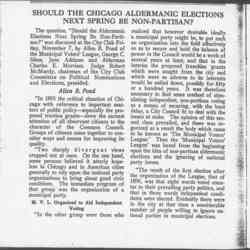
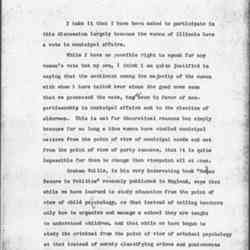
In this published version of a speech given to the Chicago City Club on November 7, Addams discusses party politics, the viability of independent parties, and the possibilities of women's role in municipal elections in Illinois.

Addams discusses party politics, the viability of independent parties, and the possibilities of women's role in municipal elections in Illinois. This speech was given to the Chicago City Club.

On behalf of the U.S. Secretary of Labor, Malone invites Addams to serve on the Committee on Organization of the Congress on Social Insurance.

Kellogg asks Zueblin for a statement on the relations of capital to labor.

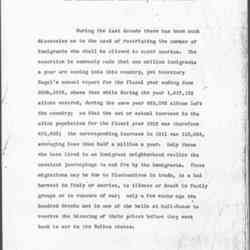
Addams offers a counter narrative to the idea that the U.S. government should limit immigration, arguing that immigrants provide benefits to society and are deserving of protections under the law. This is the fifth article of a monthly, year-long series on economic and social reform in America and a woman's role to affect change.

Addams offers a counter narrative to the idea that the U.S. government should limit immigration, arguing that immigrants provide benefits to society and are deserving of protections under the law.

Addams defends her involvement in partisan politics and argues that philanthropy and politics must often be partners in charting a better future for families and for communities. This is the first article of a monthly, year-long series on economic and social reform in America and a woman's roles in affecting change.

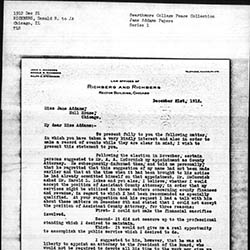
Richberg discusses the reasons he declined appointment as Cook County Assistant Attorney.

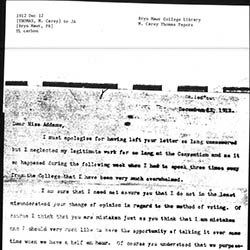
Thomas explains her rationale for behind supporting the amendment that removed voting by delegation at the National American Women Suffrage Association.

Addams argues for woman suffrage, demonstrating the limits of influence that women can have on political affairs without the vote.

Addams discusses her impressions of the campaign and election results in a speech to the City Club on November 13; the report of the event was published on November 27. Other speakers at the event were not included.

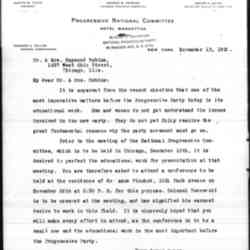
Addams informs Robins about new plans for a Progressive Party education program.

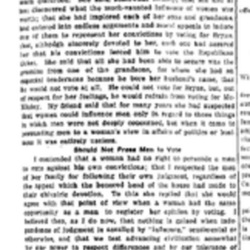
Addams argues for women's increased participation in politics and defends her decision to back a political party.

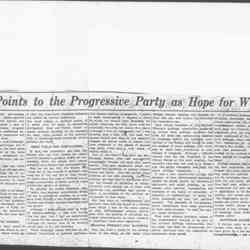
Addams argues that women's interests coincide with the work the Progressive Party is doing and that they should support it.

Lewis criticizes Addams and the Progressive Party for claiming to be the only party supporting women's suffrage, as the Socialist Party has supported the suffrage movement since its founding in 1901.
Robins sends Kellor an report of Chicago lectures for the Progressive Party campaign.
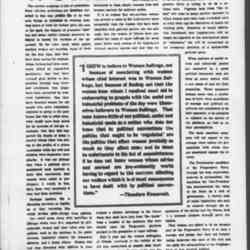
Addams discusses elections and the role of partisan politics, arguing that political pragmatism is required for social action.

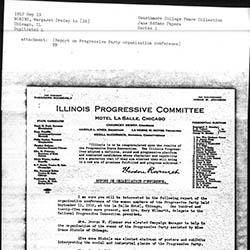
Morrisson lays out the Progressive Party's platform and gives a list of suggestions for local Progressive Party groups to implement.

Johnson examines the emotional aspects of the presidential election and how politicians use emotion to win votes.

A report of the efforts of women across the country to promote the Progressive Party in their communities.

Hapgood writes Addams about his thoughts on the African-American vote in the upcoming election.

Robins sends Addams a report of the activities of Progressive Party women.

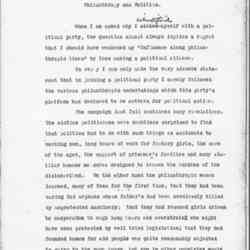
Addams discusses how philanthropic activities become political activities, citing instances from her own work in Chicago.

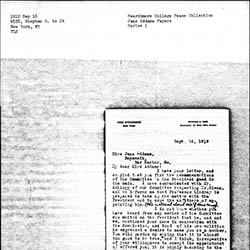
Wise writes Addams about the committee work in the Progressive Party.
Output Formats

Export results to CSV,