62 results

  • Subject is exactly "World War I, Germany and"

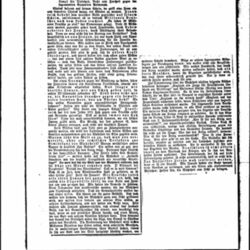
An editorial complaining that German women are bearing the brunt of the Versailles treaty, and questioning the belief that Germany was responsible for the outbreak of the war.

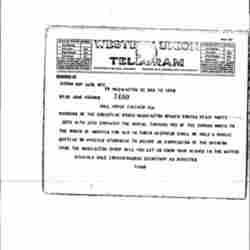
Dales asks Addams whether the Washington branch of the Woman's Peace Party should hold a meeting in support of the German women's appeal.

Lindsay tells Addams that he has issued a series of war poems and discusses his conflicted thought on it.

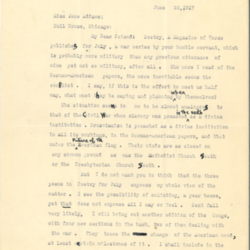
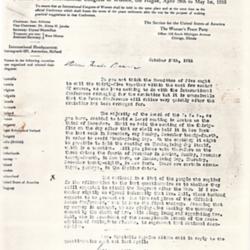
Addams writes about the activities for peace that she and other members of the International Congress of Women have accomplished.

Moore writes that Addams is "pathetic" because of a recent lecture she made in Chicago. The topic of the speech was on the lack of consideration of German-born citizens before the United States entrance into the War.

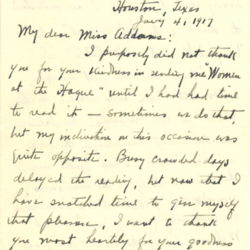
Axson praises Addams for Women at The Hague and her work advancing peace negotiations.

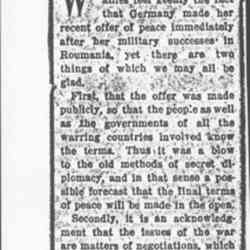
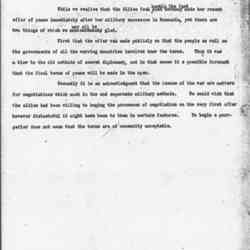
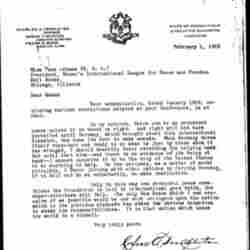
Addams remarks that Germany's recent public peace offer is a step in the right direction.

Addams remarks that Germany's recent public peace offer is a step in the right direction.

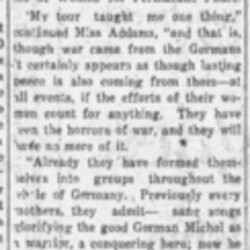
Addams gives a statement about the role of education in Germany in fostering war and peace.

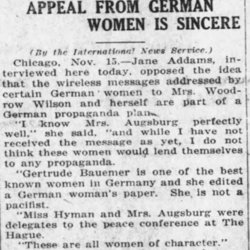
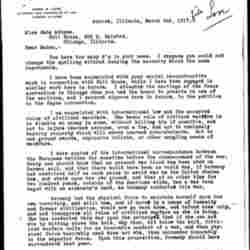
Addams notes that she knows the German women who issued the appeal and does not believe it is a propaganda plan.

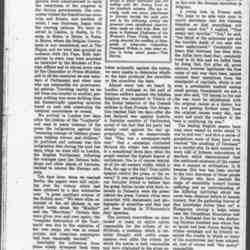
The Wall Street Journal criticizes Addams for sentimental peace talk that works against the effectiveness of the blockade.

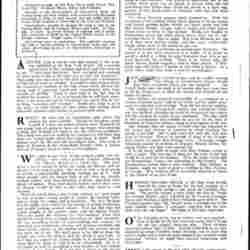
The Society reports on the impact of the war on deep-sea fishing in Geestemunde.

Conant tells Addams how shocked she is that German women have appealed to Addams to intercede in peace negotiations.

Luxemburg details her imprisonment for writing anti-war pamphlets, and asks for reading material.

Henry tells Addams that he disagrees with her views on pacifism and sees her as unpatriotic and pro-German.

Mead relates the similarities between President Wilson's Address and the Minimum Program promoted by internationalists.

Kellogg summarizes an American Union Against Militarism meeting during which members grappled with ideas about war.

Zueblin argues that Prussian militarism is the real enemy and that the war pits militarism against democracy

Schwarzschild writes to newspaper editors proposing an office to help exchange messages between Americans and their relatives living in the Central Powers.

Merkel sends Addams editorials (not found) regarding Germany's most recent diplomatic response to the sinking of the Lusitania .

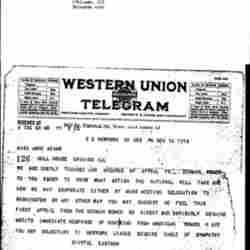
Thomas telegrams Addams that the New York Fellowship of Reconciliation supports sending food relief in answer to the German women's appeal.

Pringsheim explains to Addams her hopes for the Washington Peace Conference and involvement in war relief efforts.

Hohmeyer writes to Lochner about his observations and discussions with Germans from a recent trip to Denmark.

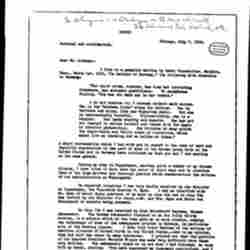
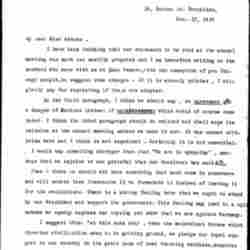
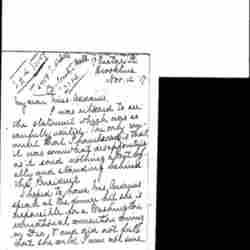
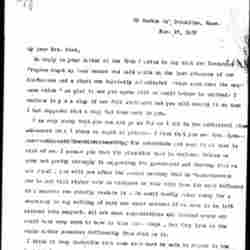
Mead suggests several edits to a prepared statement made for the Annual Meeting of the Woman's Peace Party. Mead, particularly, stresses the importance of patriotism.

Mead shares her opinion on the League of Nations and organization of the Woman's Peace Party.

Mead explains the need for strong language and government support in a prepared statement for the Annual meetings of the Woman's Peace Party.

Lochner asks Addams for documents about the pacifist group Bund Neues Vaterland.

Wald writes Addams about efforts to communicate with Germany and Austria about charges against Alice Masaryk.

Letters written by a German soldier, published in Jus Suffragi, detail the moral dilemma faced by troops at the front.

Sherman tells Addams that he believes a referendum vote for peace would not do any good, even though he sees war as a last resort.

Slade praises Addams' her recent comments on Germany's food scarcity.

Hopkins tells Addams why she is wrong, and why Germany must be defeated at this time.

Christie accuses Addams of being overly emotional and disagrees with her statements about German-Americans and the entry of the United States in World War I.

Berg and colleagues ask Carlson to sway public opinion against Black French Colonial soldiers in Germany.

Atkinson criticizes Addams's continued work for peace, claiming that the time has come to support the war effort.

Addams discusses her visits to the heads of European countries in May and June 1915.

Murray disagrees with Addams about the chances of a negotiated peace with Germany, thinking that war was the only option left.

Judd disagrees with Addams's statement about food shortages in Germany and sends an argument.

Henderson describes pro-World War I propaganda and tells Addams that he now supports peace.

Liddon asks Addams for information for a debate concerning the United States' response to Germany's violation of Belgian neutrality.

Evans sends an appeal to Massachusetts newspapers asking for support for Addams's contention that soldiers in Europe were given alcohol before bayonet charges.
Von Mach invites Addams to speak at a meeting opposing the French colonial troops in the German Rhine.
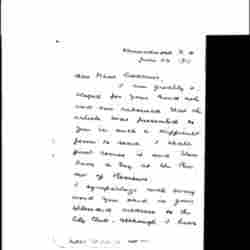
Jordan writes to Addams about Alfred Fried's work.

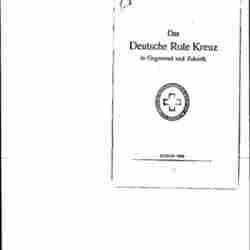
Also known as The German Red Cross in the Present and Future, November 1920

The German Red Cross provides information about its recent work.

Eastman asks Addams if the New York branch of the Woman's Peace Party can respond with sympathy to the German women's appeal.

Johnson explains her views of international and domestic militarism. She emphasizes the importance of education for children during this wartime.

Johnson sends funds to help the fight against militarism and recommends uniting the peace societies and sending President Wilson support.

Gilman tells Addams about her views on peace and willingness to participate in the Congress After the War.

Templeton tells Addams that he believes that peace will only come when Germany makes reparations for the war it caused.

Love writes to Addams about Germany's warmongering and condemns its militarism.
Output Formats

Export results to CSV,